
George Hallett: Home & Exile

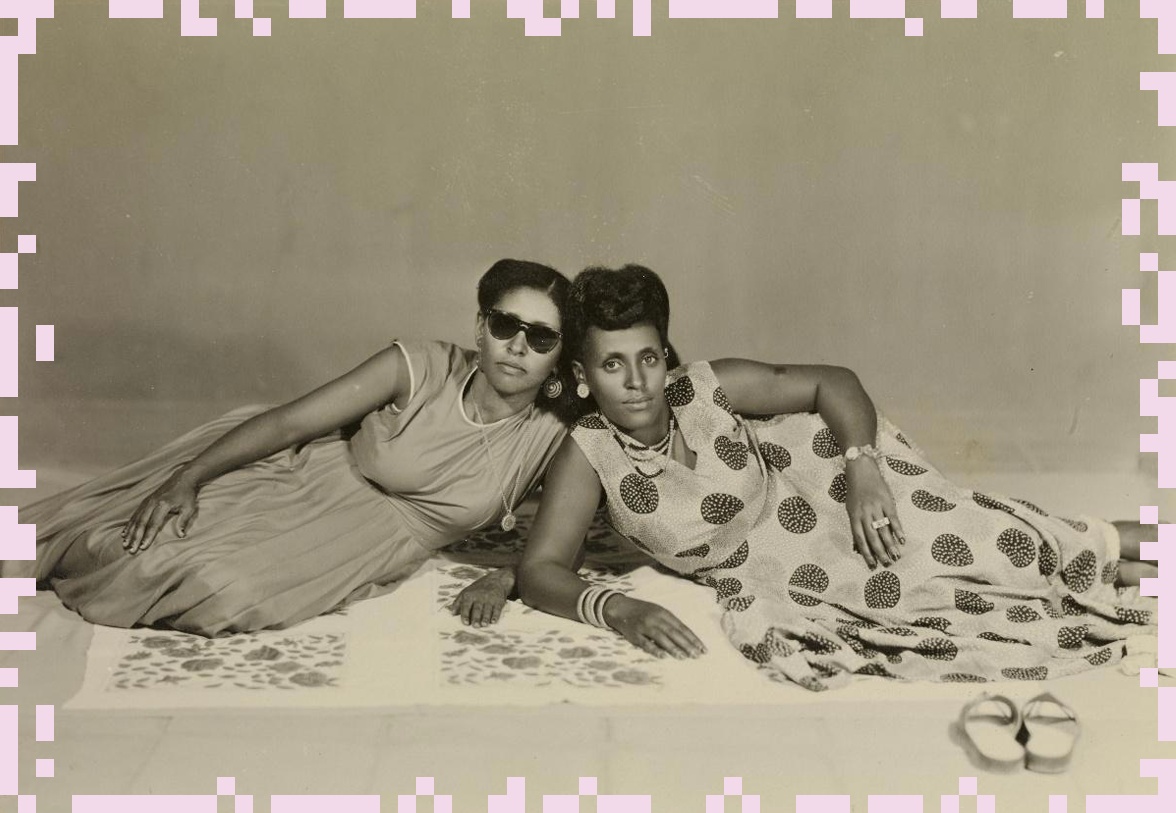
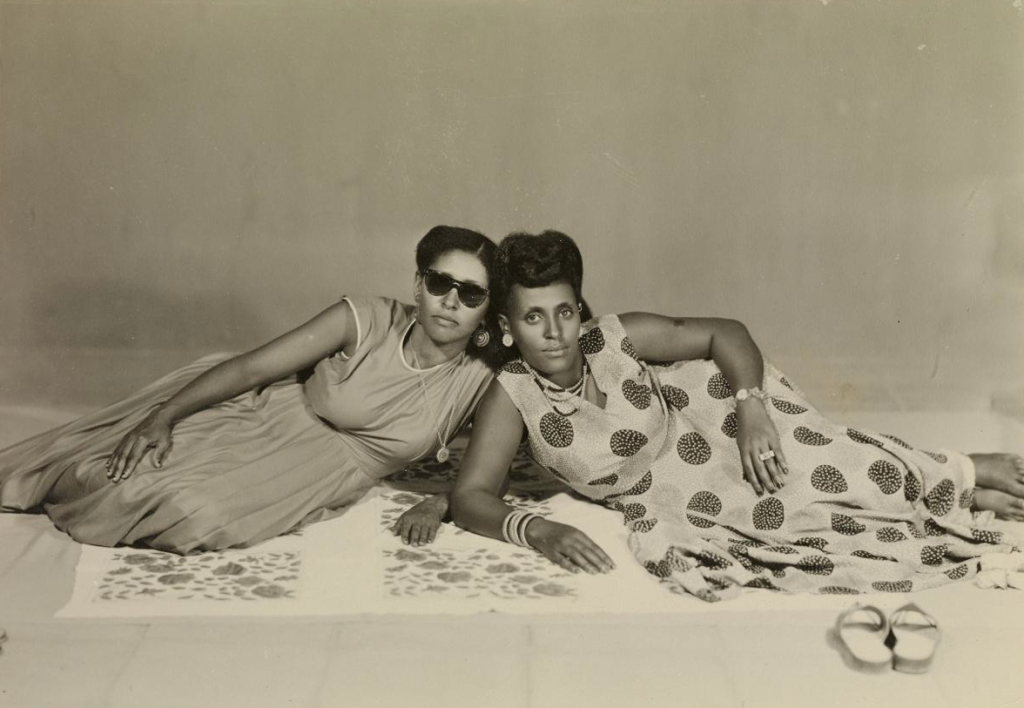
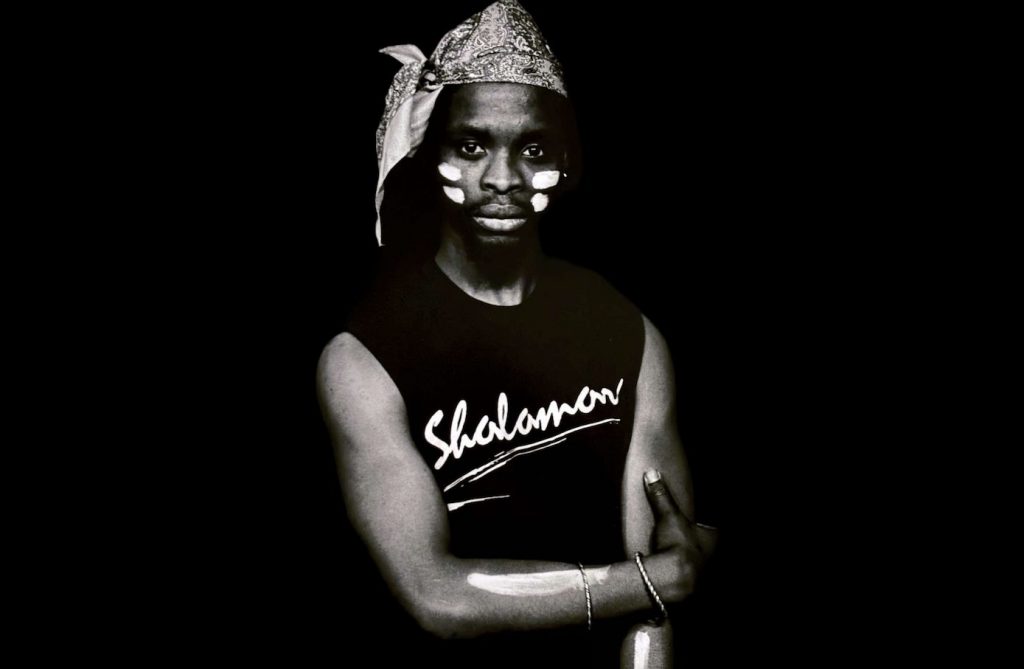
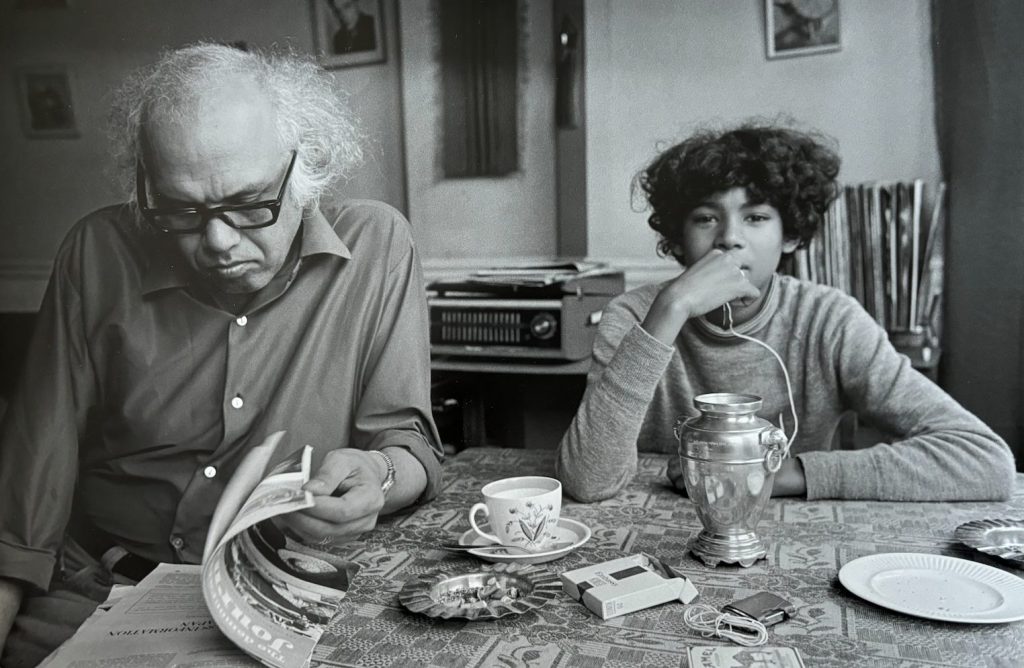
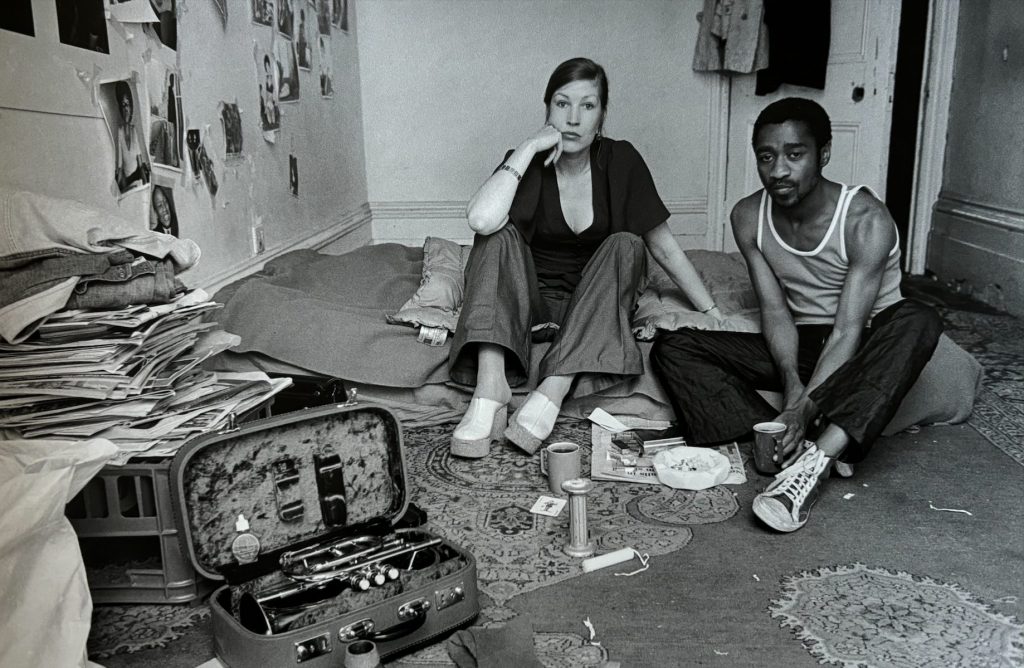
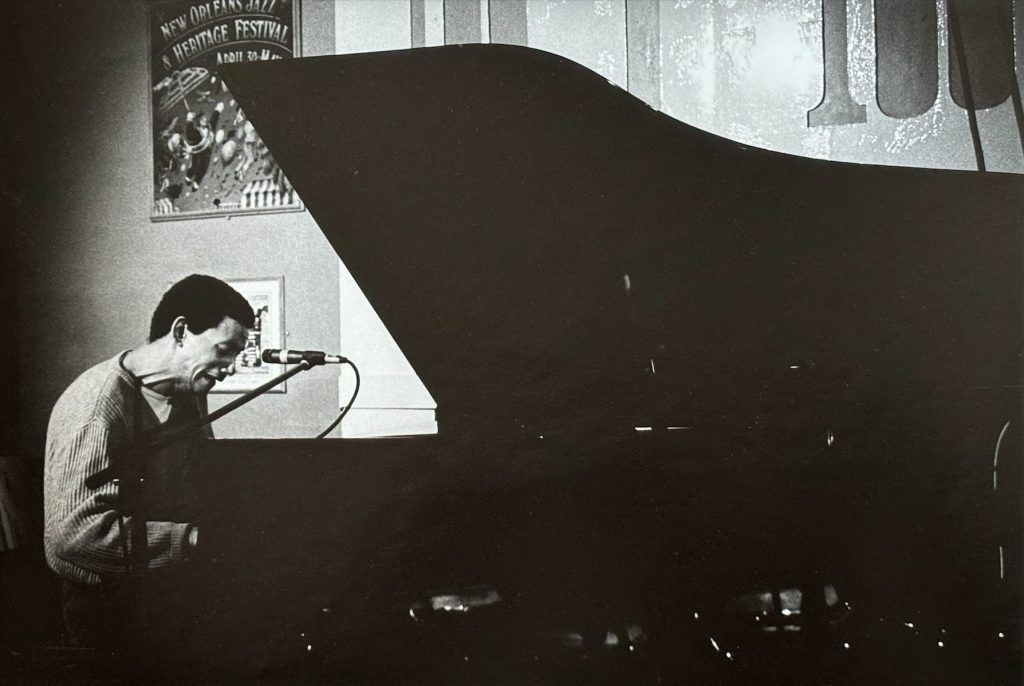
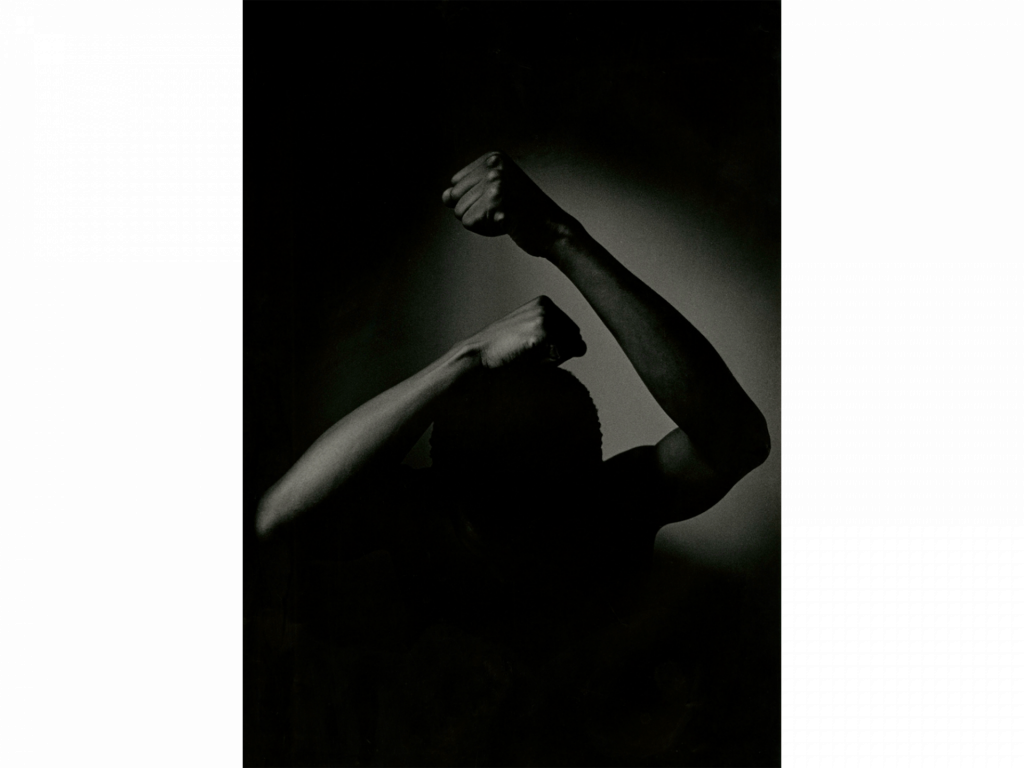
George Hallett: Home and Exile brings together works by Cape Town-born South African photographer George Hallett (1942-2020) who lived in exile in Europe from 1970 to the mid-1990s.

Introduced to literature, music and visual arts by South African authors Richard Rive (1931-1989), James Matthews (1929-2024), and visual artist Peter Clarke (1929-2014), Hallett developed his practice as a self-taught street photographer in Cape Town in the 1960s. His early images depict street scenes in places such as the neighbourhood of District Six, Black communities, and cultural figures and moments that were to become a major theme throughout his career. 

As a South African of mixed heritage, his experience of discrimination during apartheid, and the lack of professional opportunities, led him to exile. He first settled in England in the early 1970s before moving to France and the Netherlands. In Europe, and on visits to the United States and other parts of the world, Hallett photographed both South African exile and Black life with the intention of creating a visual record that restored dignity to a people that was either absent or misrepresented in mainstream media. In doing so, he created an incredible photographic archive of Black resistance and resilience both in the place from which he was exiled, and the places that he called home.

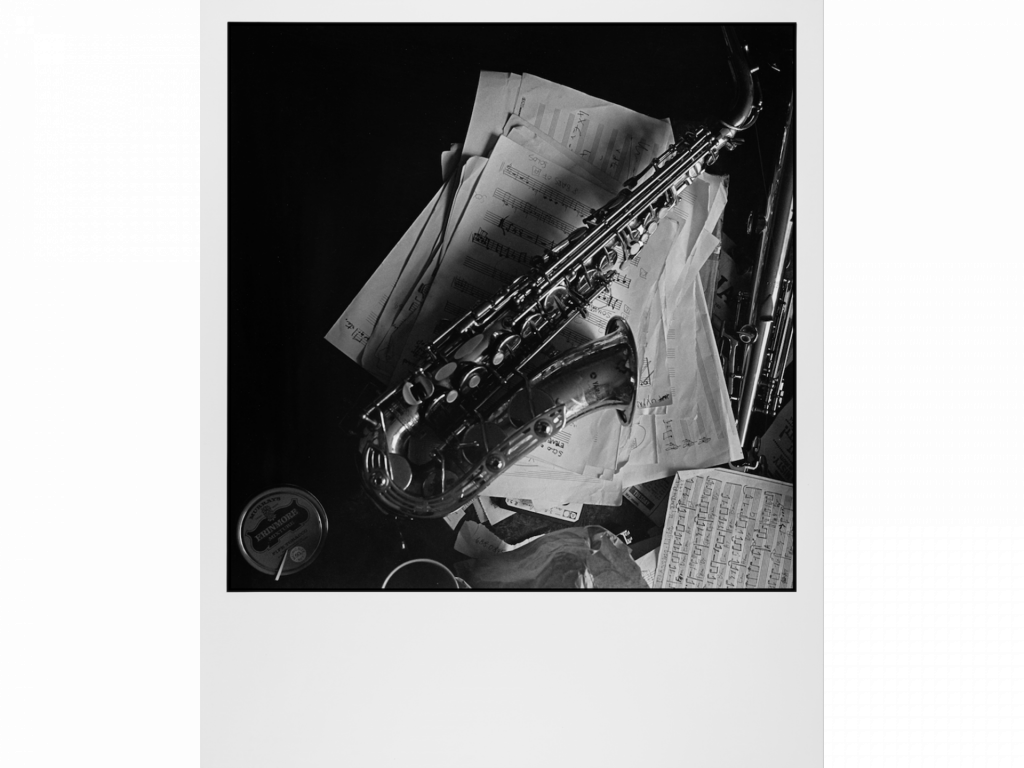
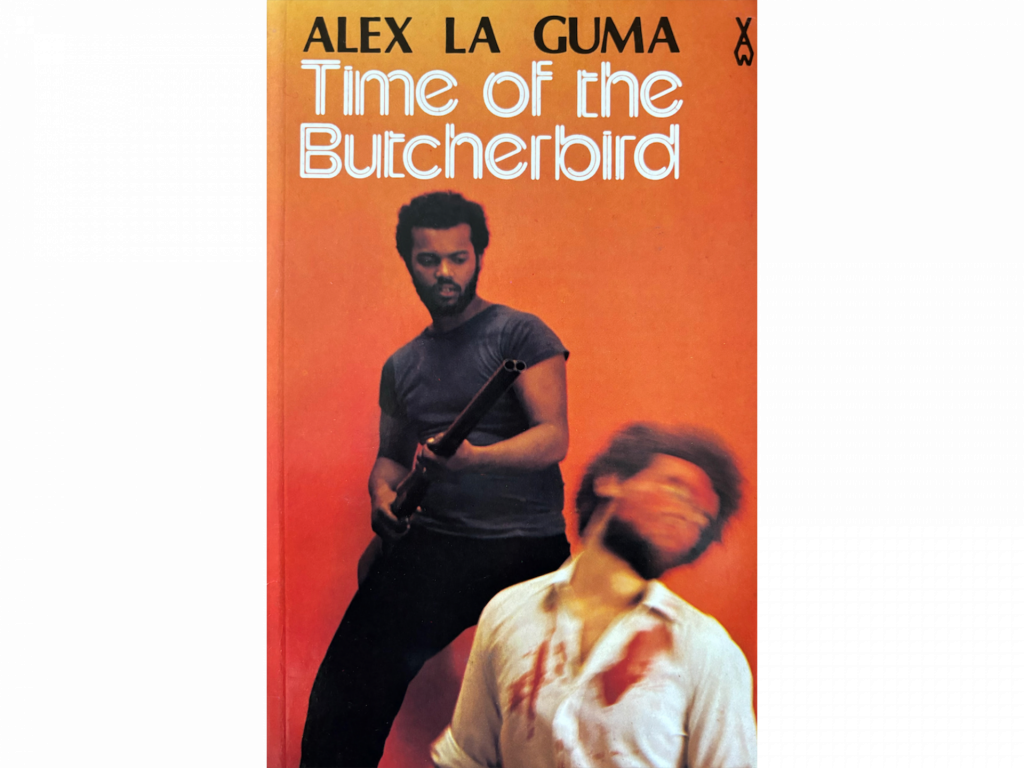
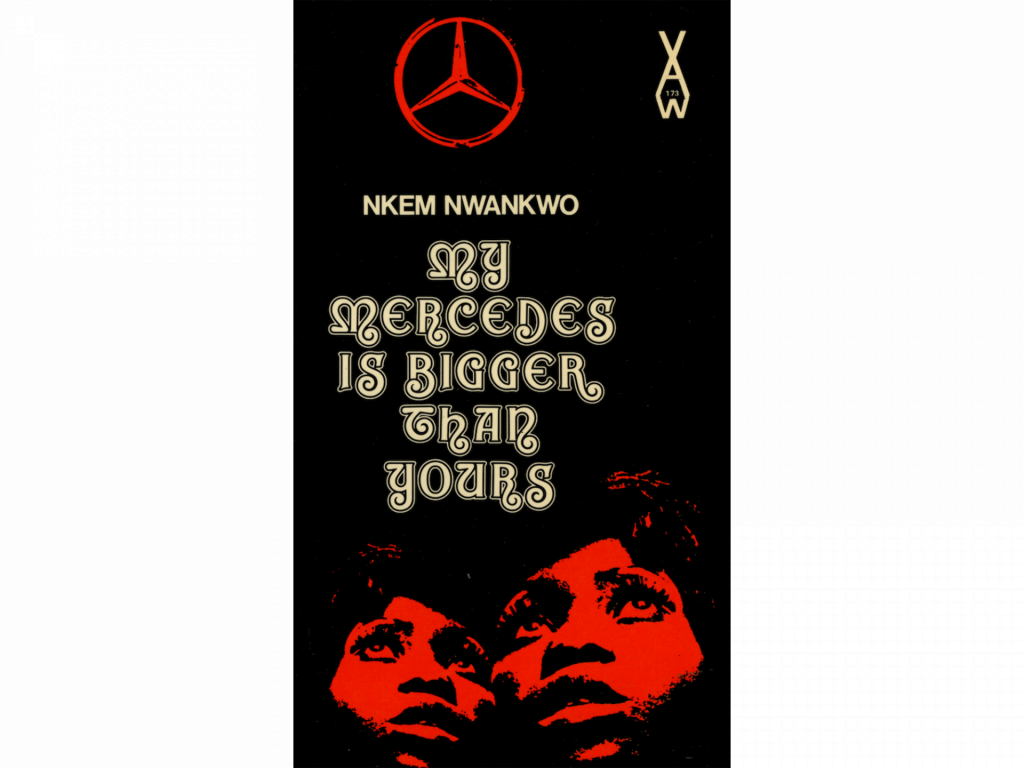
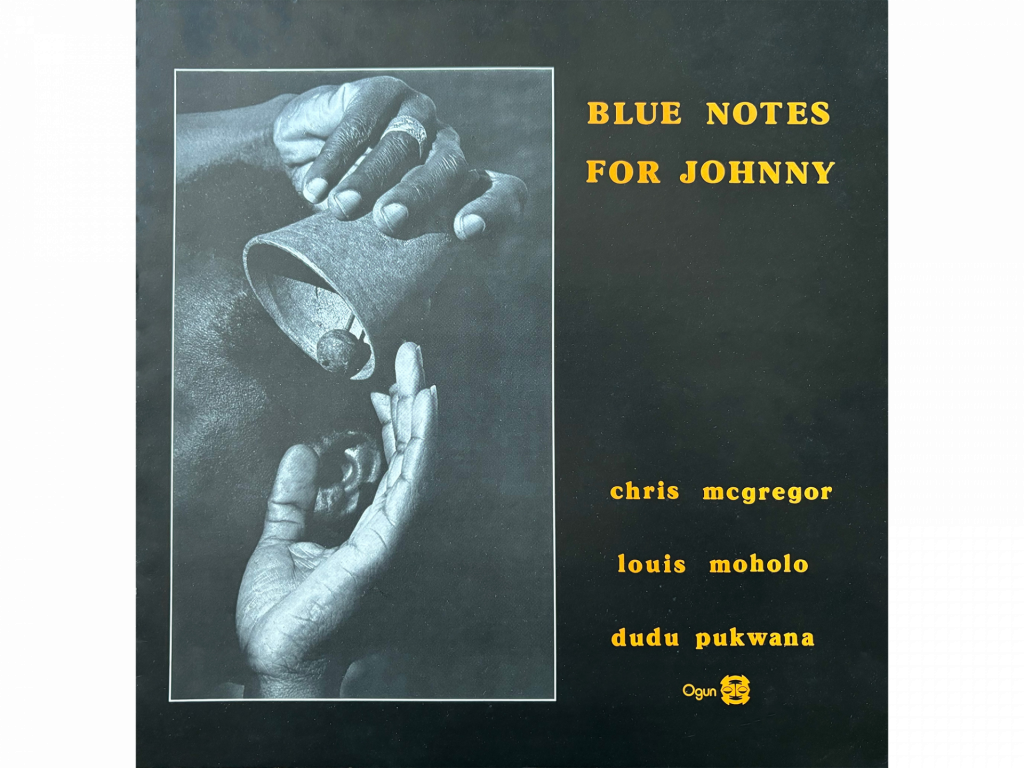
In Bristol, George Hallett: Home and Exile takes its cue from an article published in 1966 in the Western Daily Press announcing a talk by South African author, journalist, and political activist Alex La Guma (1924-1985) in the venue formerly known as Colston Hall. The exhibition presents a selection of images around the figure of La Guma, as well as other South African writers, visual artists, and jazz musicians who left their country because of apartheid’s repressive laws. The display also includes examples of Hallett’s designs for book covers of the African Writers Series published in Britain by Heinemann, and record sleeves created for the jazz label Ogun Records.

First presented at Clémentine de la Féronnière in Paris in March 2025 as part of Centre Pompidou’s programme “Échos Paris noir”, the exhibition was subsequently shown at Exhibition Research Lab (ERL) Gallery, Liverpool. For Bristol Photo Festival, it is presented at IC Visual Lab, located at 6 West Street—the former home of the Southern Africa Resource Centre (SARC), an organisation that campaigned against apartheid. 

Biographies

George Hallett (1942–2020) was a self-taught photographer from Cape Town, South Africa. He exhibited at Clémentine de la Féronnière, Paris (2025); Peltz Gallery, London (2023); Michaelis Galleries, Cape Town (2022); Bozar, Brussels (2018); Bamako Encounters: African Biennale of Photography, Bamako (2017); and EVA International, Ormston House, Limerick (2016). He was also included in Rise and Fall of Apartheid: Photography and the Bureaucracy of Everyday Life, curated by Okwui Enwezor at the International Center of Photography, New York (2012), which toured to Haus der Kunst, Munich and Padiglione d’Arte Contemporanea, Milan (2013), and Museum Africa, Johannesburg (2014–15).

His work is held in numerous private and public collections, including Iziko – South African Art Gallery; Michaelis School of Fine Art, University of Cape Town; District Six Museum and Bo-Kaap Museum, Cape Town; and the Library of Birmingham, UK.

Christine Eyene is an art historian and curator. She is currently Curator of French Institute Cameroon’s 2027 cultural season. From 2022 to 2026, she was Senior Lecturer in Contemporary Art and Co-Director of ERL Gallery, Liverpool John Moores University. Prior to that, she worked for 10 years with Pr. Lubaina Himid CBE RA on the project Making Histories Visible at the University of Lancashire.

Her research and curating encompass contemporary art from a global perspective, with an interest in African and Diaspora arts. Her practice also engages with socially oriented initiatives, urban culture, new media, music, design, and architecture.

In 2024 she completed her PhD in History of Art at Birkbeck, University of London, under the supervision of Professor Annie E. Coombes. Her thesis focuses on the relationship between text, African literature, and visual representation in the work of George Hallett.

In collaboration with:

Supported by:
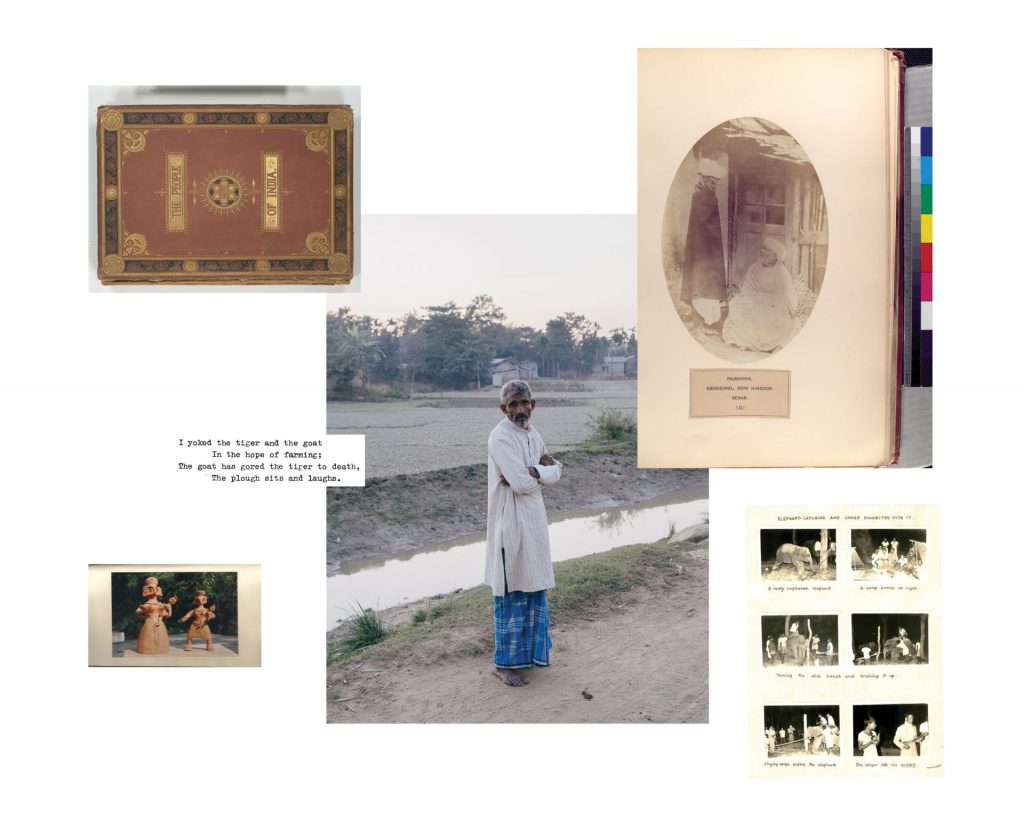
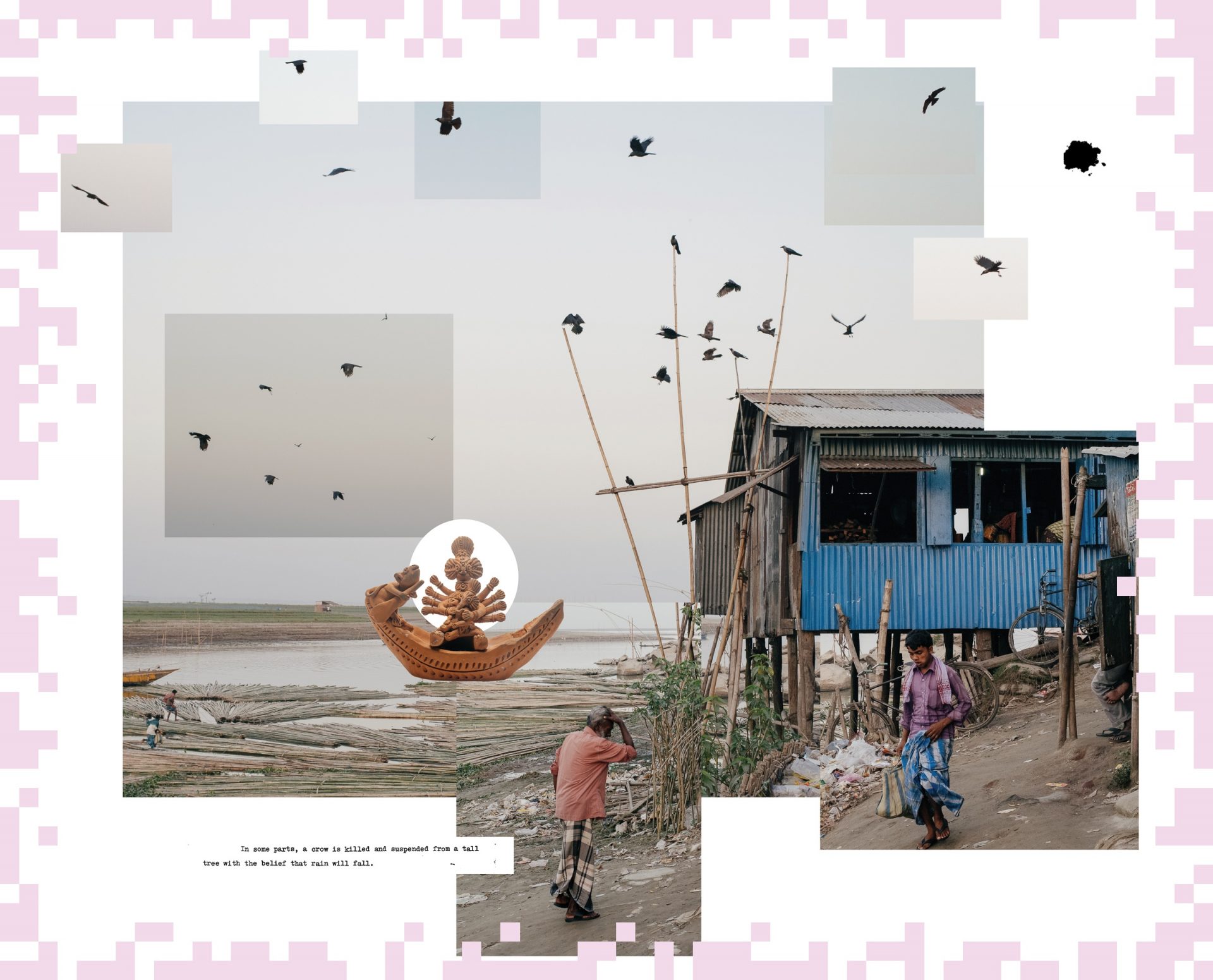
People of Clay by Akshay Mahajan

“It took me many years to notice that, in the hush between conversations, she would sing. Simple tunes tinged with a gentle melancholy drifted through the room, sung in a tongue I had yet to decipher — folk songs belonging to a people all but erased from the map. ‘What are folk songs for?’ I once asked her. ‘They’re like prayers, or like roadmaps of a people,’ she answered. Those melodies became my compass.” Akshay Mahajan

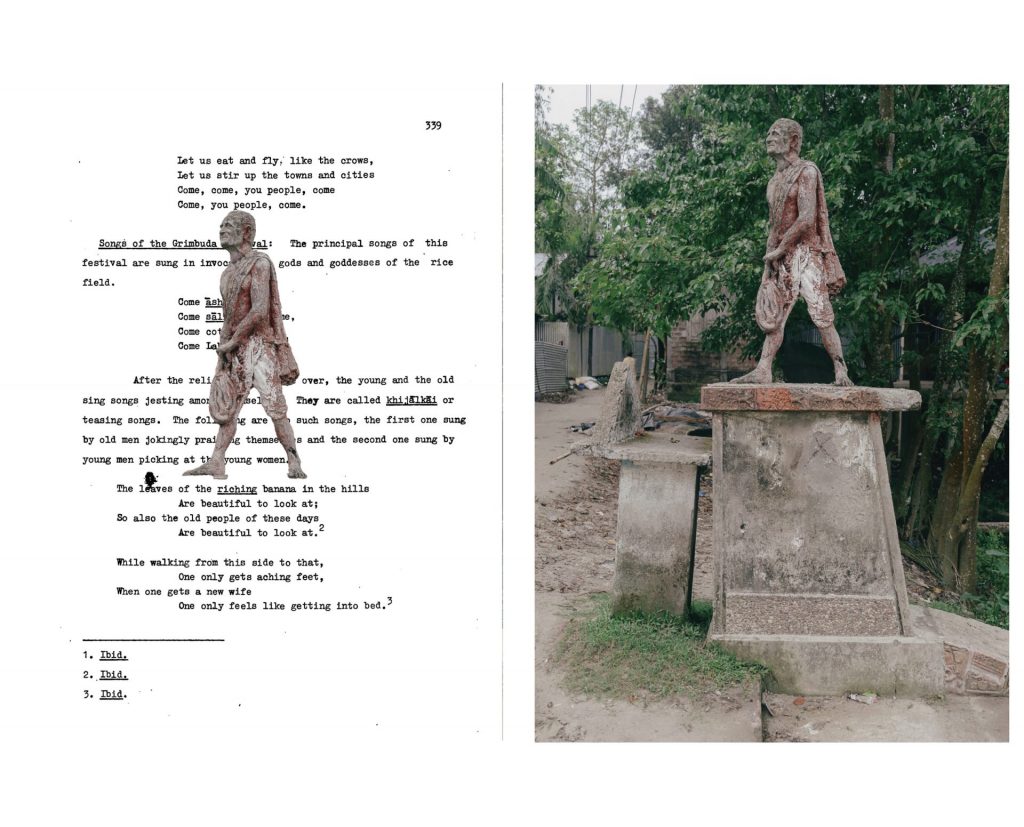
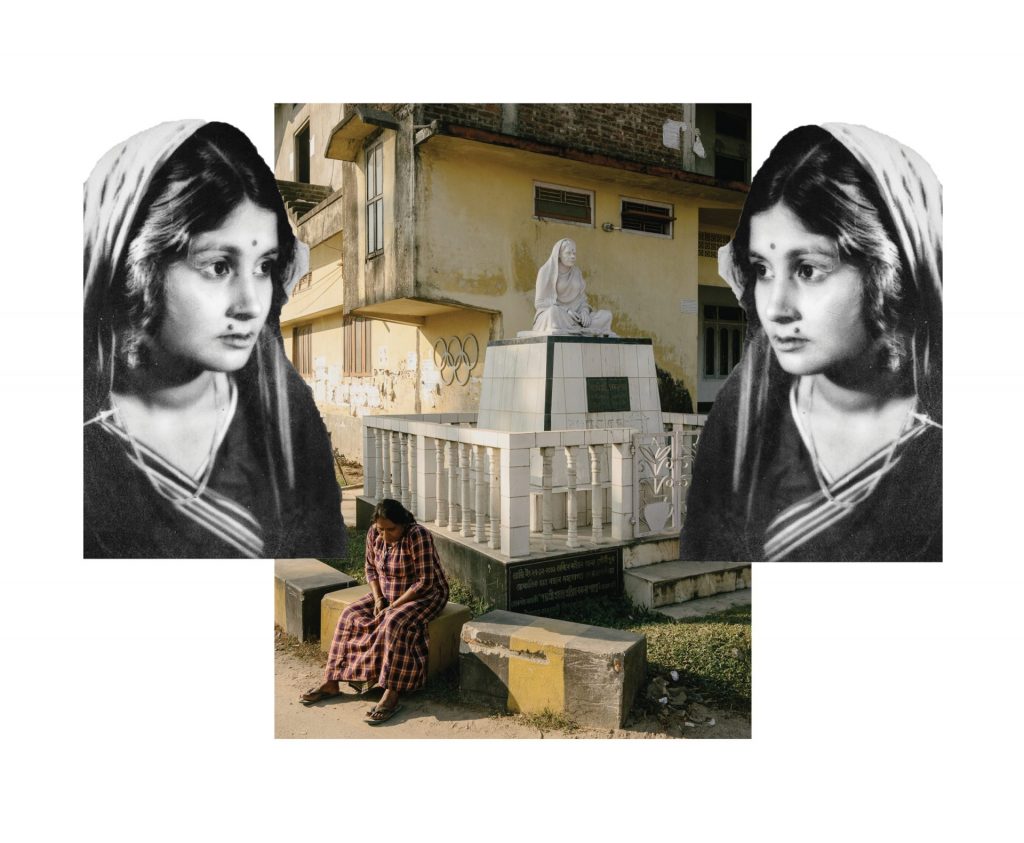
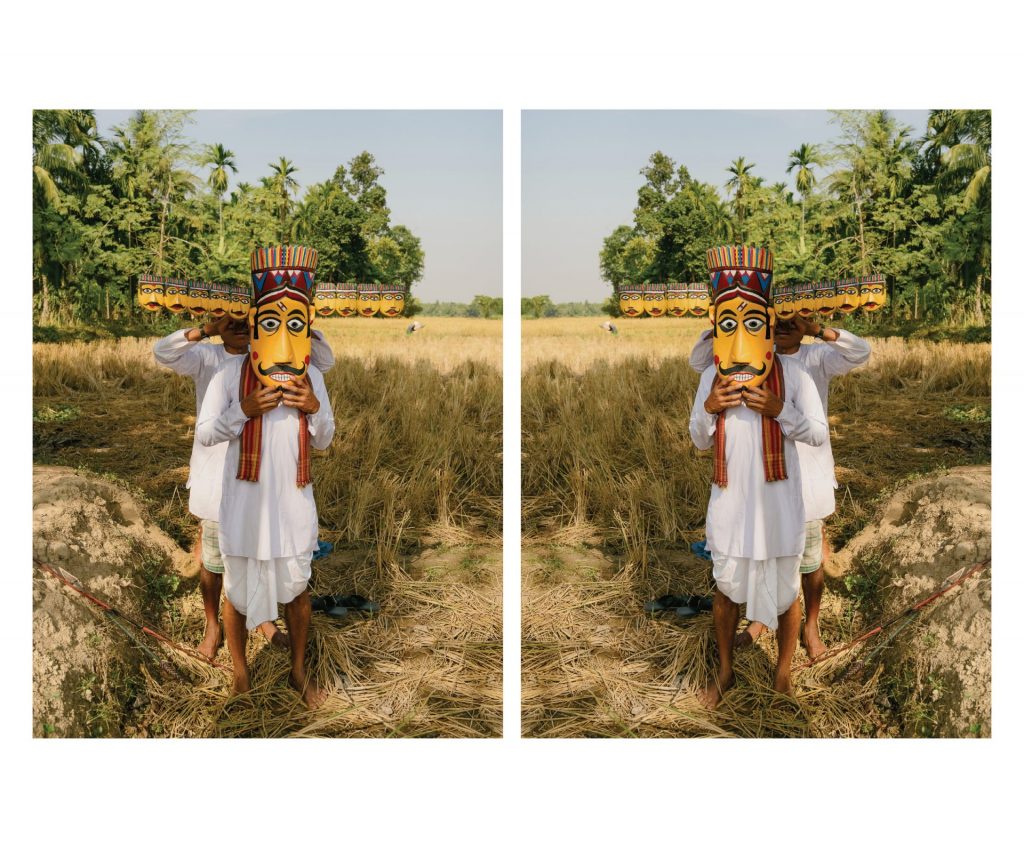
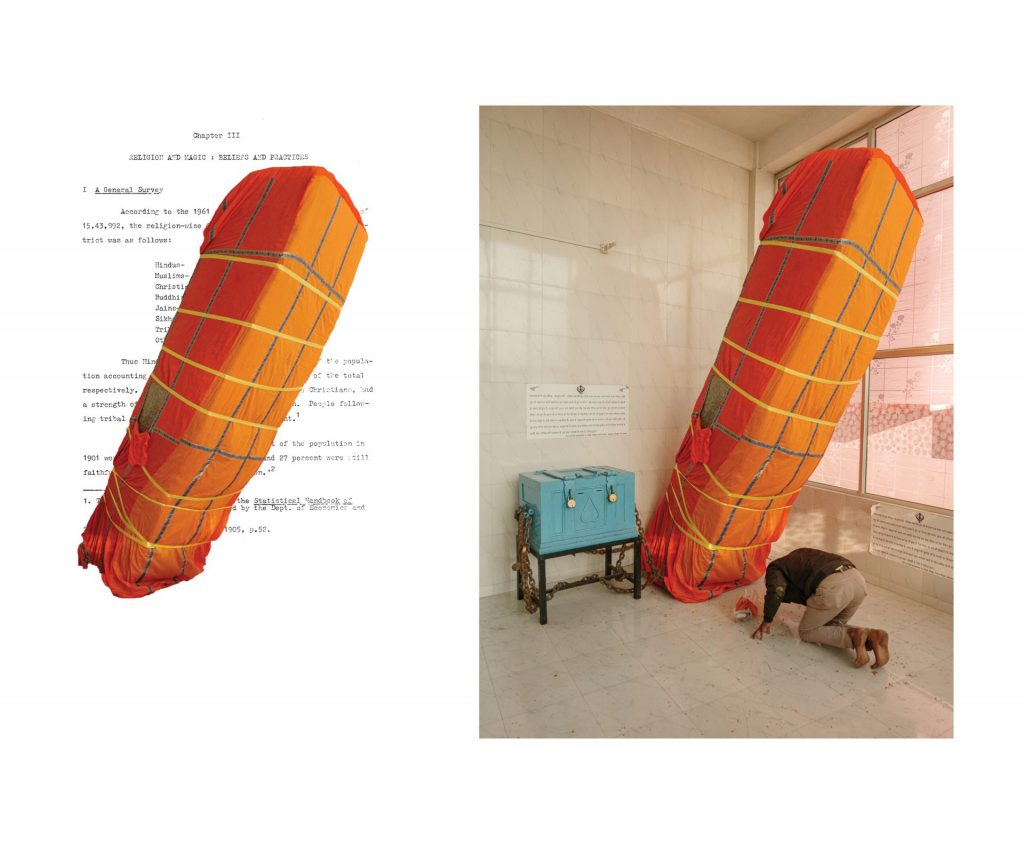
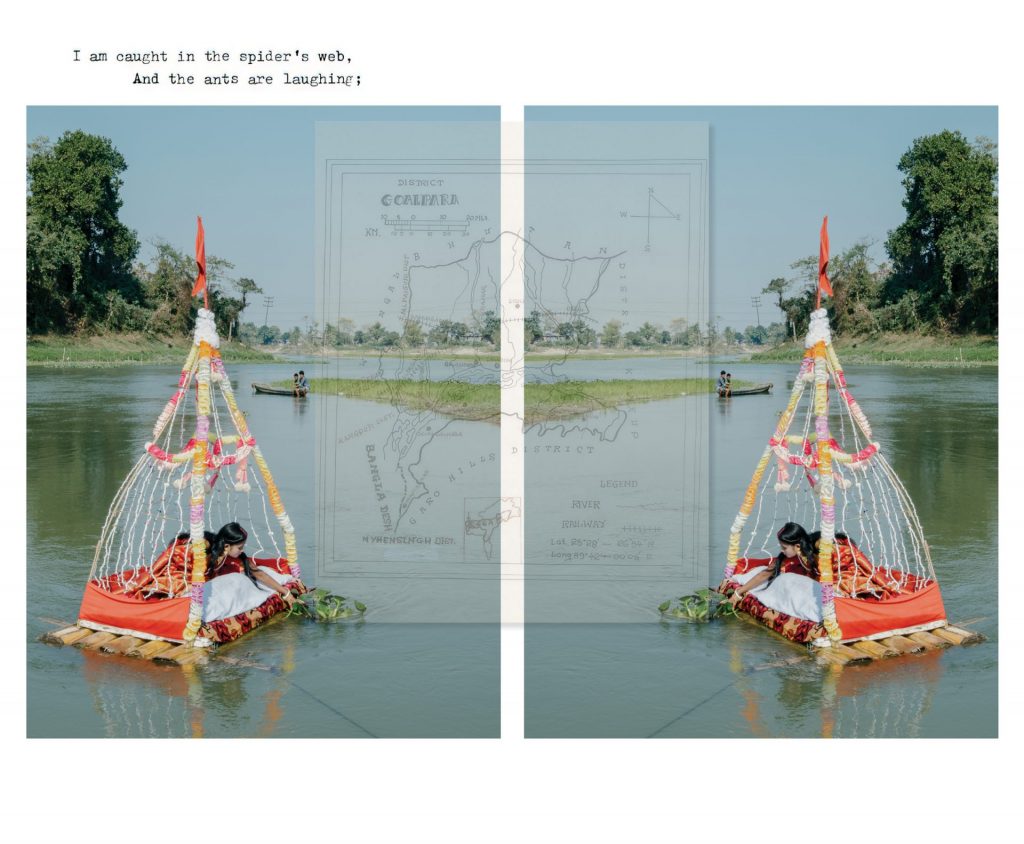
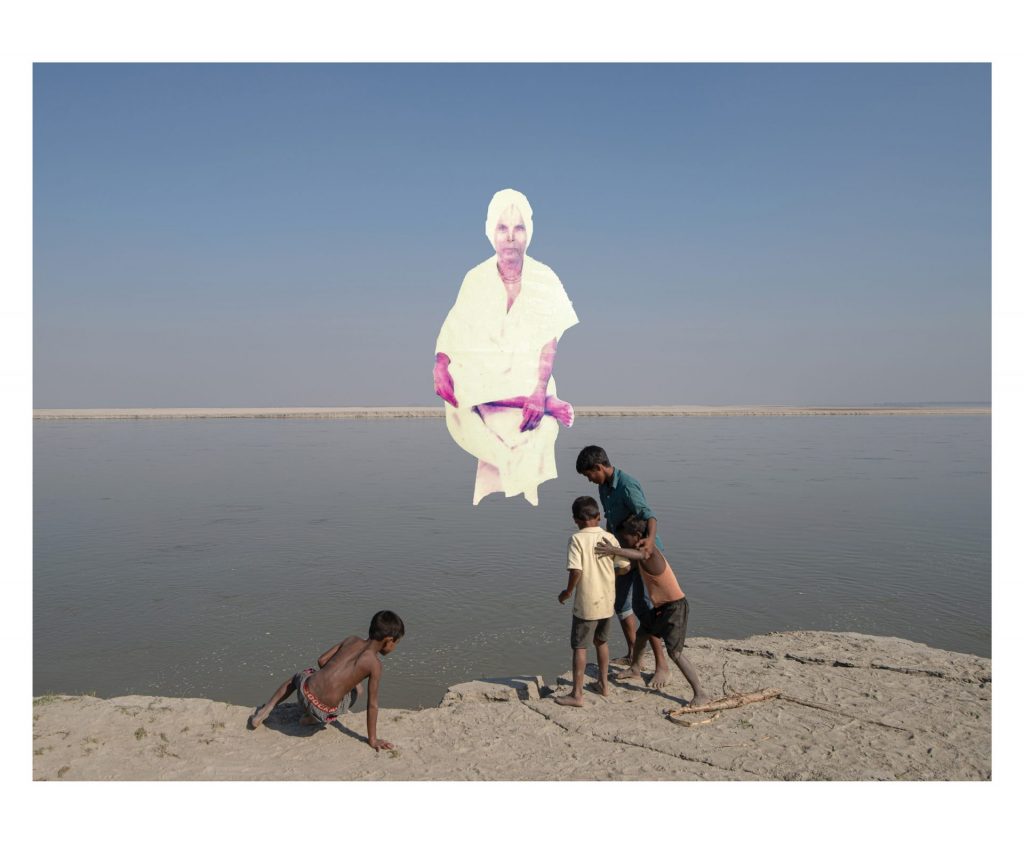
Akshay Mahajan’s People of Clay (2016–present) traces the hidden histories embedded along the Brahmaputra River as it winds through India’s Goalpara region and across the border into northern Bangladesh. As Mahajan writes, “colonial survey lines cleaved one landscape into many, and the people caught in between were flattened into shorthand.” The project seeks to reverse this erasure by reconstructing the layers of story, myth and memory that shape the region. The result is a subjective cartography, formed through slow observation, listening and engagement.

The work draws extensively on myths and folktales. In the legend of Behula, a husband is cursed and killed by a snakebite, his body set adrift on the river. Refusing to abandon him, his grieving wife climbs onto the raft and accompanies him downstream. Though dismissed by others as mad, her devotion is ultimately rewarded when a goddess restores her husband to life. In People of Clay, Mahajan reimagines this moment, depicting Behula leaning gently over her husband’s body to retrieve a water hyacinth. Through such reinterpretations, the artist brings folklore into the present, allowing ancient stories to continue evolving.

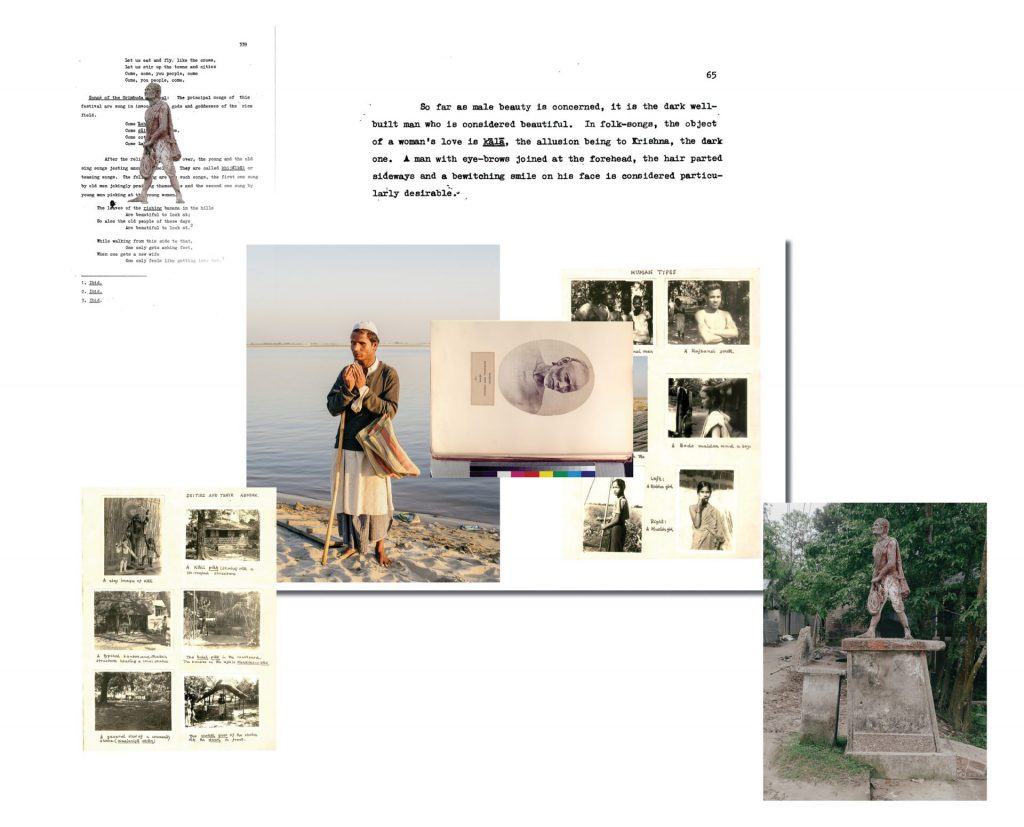
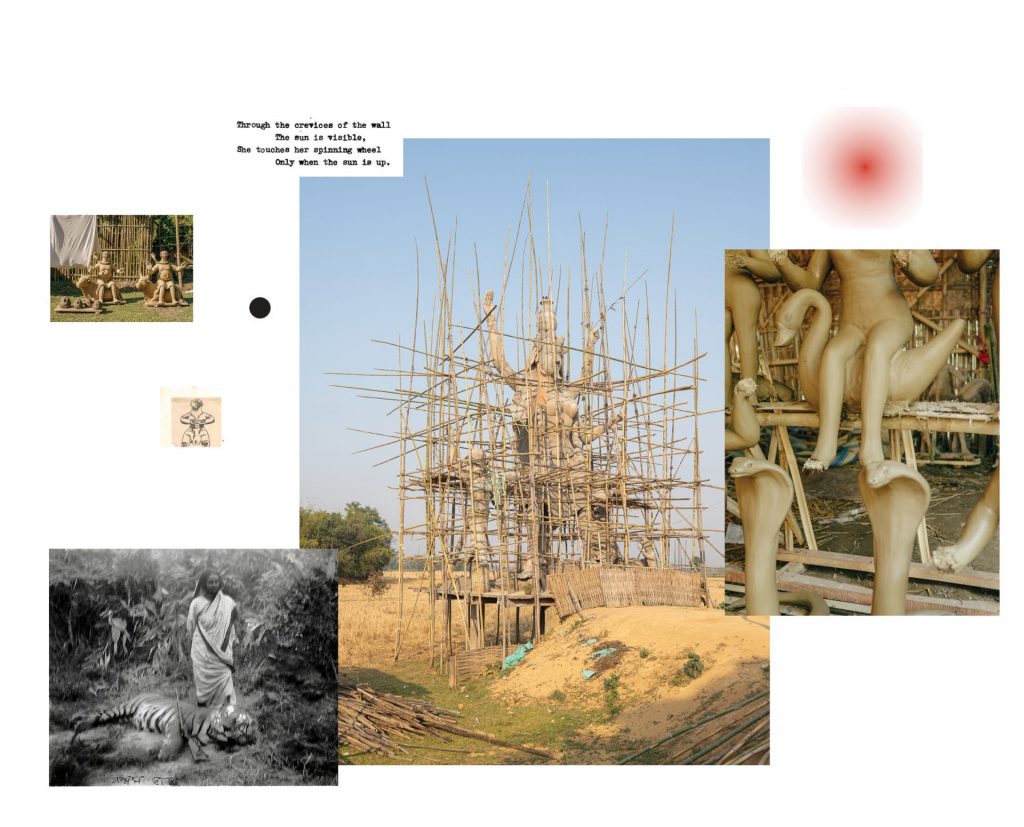
Throughout the exhibition, Mahajan combines photography, collage and found materials, working through an iterative process in which a single image becomes the starting point for layers of addition and transformation. He compares this approach to the telling of a grandmother’s tale, where new details emerge with each retelling. The resulting works function as mnemonic devices, revealing narratives and memories overlooked or erased from official archives.

Yet People of Clay is not only an act of remembrance. As Mahajan writes: “My intention is simple: to recall that we are all people of clay, our contours forever provisional, never fully bound to the frontiers we inherit. And, like me, you may find that a single, unguarded song is enough to press a new, more generous outline into being.”

Biography

Akshay Mahajan (b. 1985, India) is an artist that uses photography and collage as tools to explore collective memory. His practice examines postcolonial cities, landscapes, folklore and mythology, to reveal how past, present and future are always entangled, shaped through varied forms of power. His work observes how our postcolonial reality is often anchored in pre-colonial stories and memories, using the camera as a tool to lay bare these connections. With a discerning eye, Mahajan explores how the physical structures and spaces in the non-western world can become emblematic of unfulfilled aspirations and unrealised potentials due to unresolved historiography. In terms of method, he uses images as a starting point to build large-scale assemblages that combine both found and archival materials. He describes this process as one of ‘radical citation’, allowing multiple voices to flow through his work. 

Mahajan has exhibited widely, including: Vezasca Photo Festival, Singapore International Festival of Arts, Jogja Fotografis Festival, Athens International Photo Festival, Foam Museum, Cairo Biennale, Bamako Encounters and the Jakarta International Photography Festival. Awards include the Verzasca Foto Festival Award (2024), Foam Talent (2024), and the Aperture Portfolio Prize shortlist (2023).

In collaboration with:

Supported by:
One of Many: An Alternative History of Photography

The birth of photography has long been a contested narrative between the United Kingdom and France, often centred around figures such as Nicéphore Niépce and William Henry Fox Talbot. One of Many opens that conversation outwards, acknowledging that the history of photography is not singular but multiple. Histories are shaped as much by what they exclude as by what they include this project seeks to foreground those omissions and propose alternative viewpoints.


Through a cross-cultural dialogue between France and the United Kingdom, we bring together perspectives from leading curators, scholars, and institutions to explore how photographic histories are constructed and how they might be reimagined.

Invited selectors:
Mark Sealy (Autograph), Taous Dahmani (The Photographers’ Gallery), Christine Eyene (Independent Curator), Sergio Valenzuela Escobedo (ENSP Arles) and Annabel Lacour (Musée du quai Branly – Jacques Chirac).

Biographies

Annabelle Lacour (Musée du quai Branly – Jacques Chirac, Paris)

Annabelle Lacour has been Curator of the Photographic collection at the musée du quai Branly – Jacques Chirac since 2018. She curated the exhibition Hoda Afshar: Performing the Invisible (2025) and co-curated several international exhibitions, including Reinventing One’s Past (musée Théodore Monod – IFAN, 2026), Re-enchanting Our Lives (IFAN, 2025),Inhabiting This World ( IFAN, 2024), and Opening the World Album: Photographs 1842–1911 (musée du quai Branly – Jacques Chirac, 2023). At the musée du quai Branly – Jacques Chirac, she has also curated numerous installations within the permanent galleries. She was co-editor of Mondes photographiques, histoires des débuts, a landmark reference work devoted to the early histories of photography beyond Europe, bringing together contributions from forty-eight international authors. Annabelle Lacour is a member of the selection committee of the Photography Award of the musée du quai Branly – Jacques Chirac, dedicated to contemporary photography. Her research focuses on the uses of photography in colonial and postcolonial contexts, as well as on contemporary artistic practices that examine the medium’s legacies, the history of ways of seeing, and the power relations embedded in photographic mechanisms.

Christine Eyene (Independent Curator)

Christine Eyene is an art historian and curator. She is currently Curator of Institut français du Cameroun’s 2027 Cultural Season. She is the founder of Bikoka Art Project, an independent initiative bringing together art, nature, and community in the rural municipality of Lolodorf (Cameroon). She also developed the George Hallett Research Collection aiming to research, preserve, and disseminate the work of South African photographer George Hallett (1942-2020).

Mark Sealy (Autograph, London)

Professor Mark Sealy is Executive Director of Autograph, a position he has held since 1991, and Professor of Photography, Rights and Representation at University of the Arts London, London College of Communication. He is currently serving as the Artistic Director of the Triennial of Photography Hamburg 2026. His research and curatorial practice critically examine the relationships between photography and art, social change, identity politics, race, and human rights. He holds a PhD from Durham University and has written extensively for leading international photography journals and photographic publications. He has curated major exhibitions and photograph festivals, produced numerous artist publications, and commissioned photographers and filmmakers and worldwide. He jointly initiated and co-led the development of Rivington Place which is now home to Autograph, an £8 million capital arts building in London, which opened in 2007. His contributions to photography and the visual arts have been widely recognised. He was awarded the Hood Medal by the Royal Photographic Society in 2007, appointed Member of the Order of the British Empire (MBE) in 2013 for services to photography, and further appointed Officer of the Order of the British Empire (OBE) in 2022 for services to art.

Sergio Valenzuela Escobedo (École Nationale Supérieure de la Photographie (ENSP), Arles)

Artist, researcher and publisher Sergio Valenzuela Escobedo holds a PhD in photography from the École nationale supérieure de la photographie in Arles. After a year at the National School of Art in Johannesburg (NSA), he earned a photography degree in Chile and completed his MFA at the Villa Arson in Nice. He has curated the exhibitions Mapuche at the Musée de l’Homme in Paris and Monsanto: A Photographic Investigation at the Rencontres d’Arles. He has been invited to teach at various schools and institutions, including Parsons Paris, ISSP and Atelier Noua. He also collaborated in ‘1000words’ and co-founded ‘doubledummy’, a platform of critical reflection about documentary photography.

Taous Dahmani (The Photographers’ Gallery, London)

Dr Taous Dahmani is a London-based French, British, and Algerian art historian specialising in photography. She has curated both group and solo exhibitions internationally, including the 2022 Louis Roederer Discovery Award at Les Rencontres d’Arles (France) and the 2024 Jaou Photo Biennale in Tunis (Tunisia). Her solo curatorial projects include SMITH at NOUA (Bodø, Norway), Anastasia Samoylova at the Saatchi Gallery (London, UK), and Adam Rouhana at Kyotographie (Kyoto, Japan). Since September 2025, she is Curator at The Photographers’ Gallery (London, UK). Dahmani’s writing has been widely published in photobooks and journals. She edited Shining Lights: Black Women Photographers in 1980s–90s Britain (MACK/Autograph ABP, 2024), and Assemblies (2025, FOMU/FW:Books).

In collaboration with:

Supported by:
Family Times by Annie Wang & Liu Hsing Yu

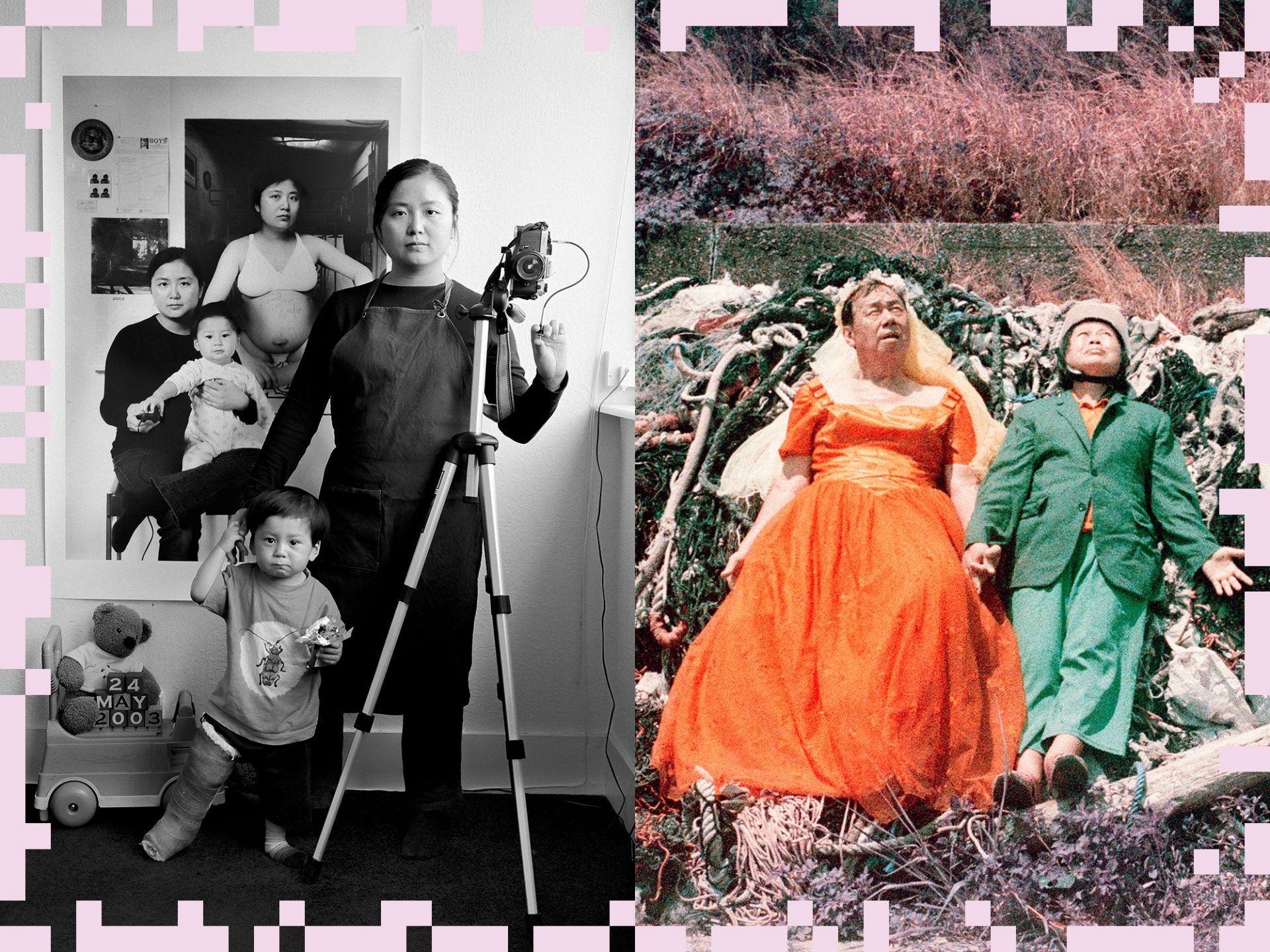
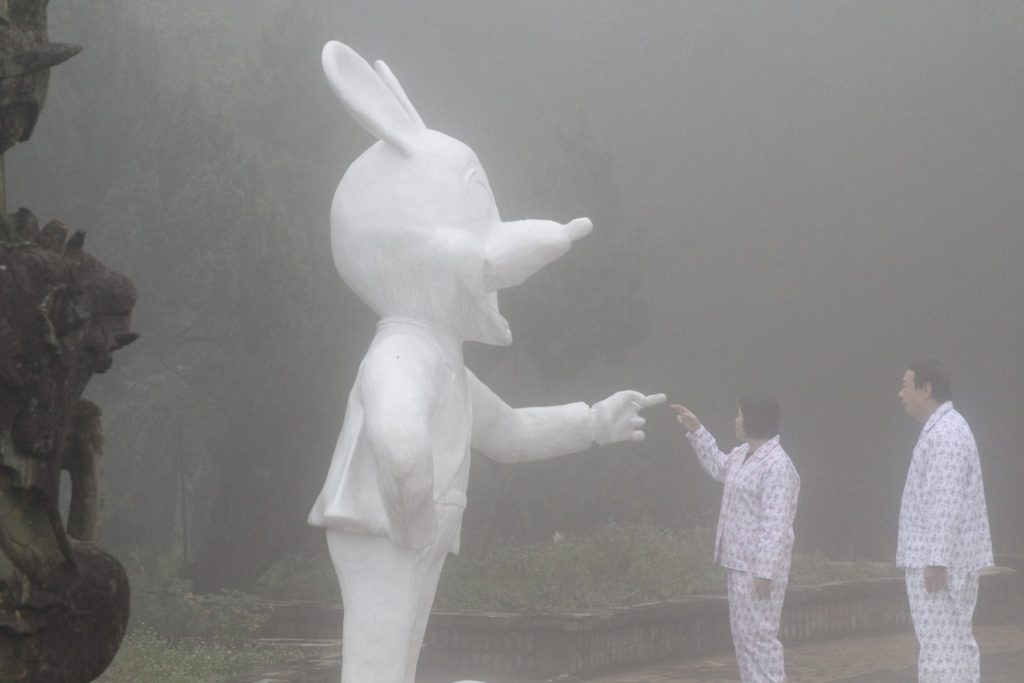
Drawing on the work of Liu Hsing Yu and Annie Wang, Family Times explores how family relationships are never fixed but continually reshaped by time, memory, care and changing social expectations. Both artists use photography to revisit intimate relationships across many years, treating time not simply as subject matter but as an active material within their practice.

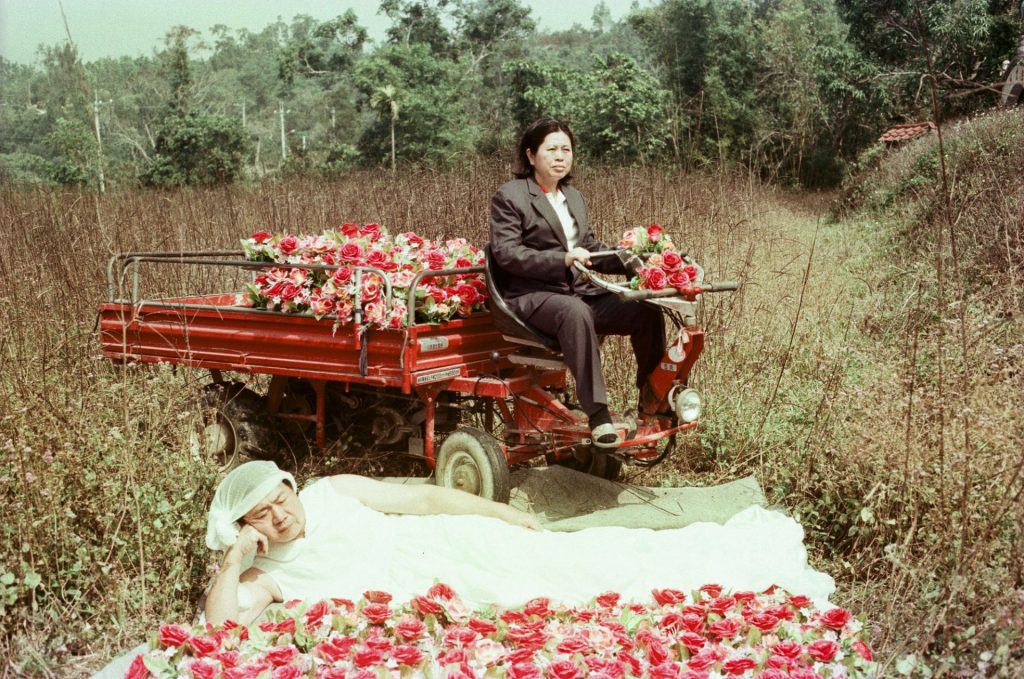
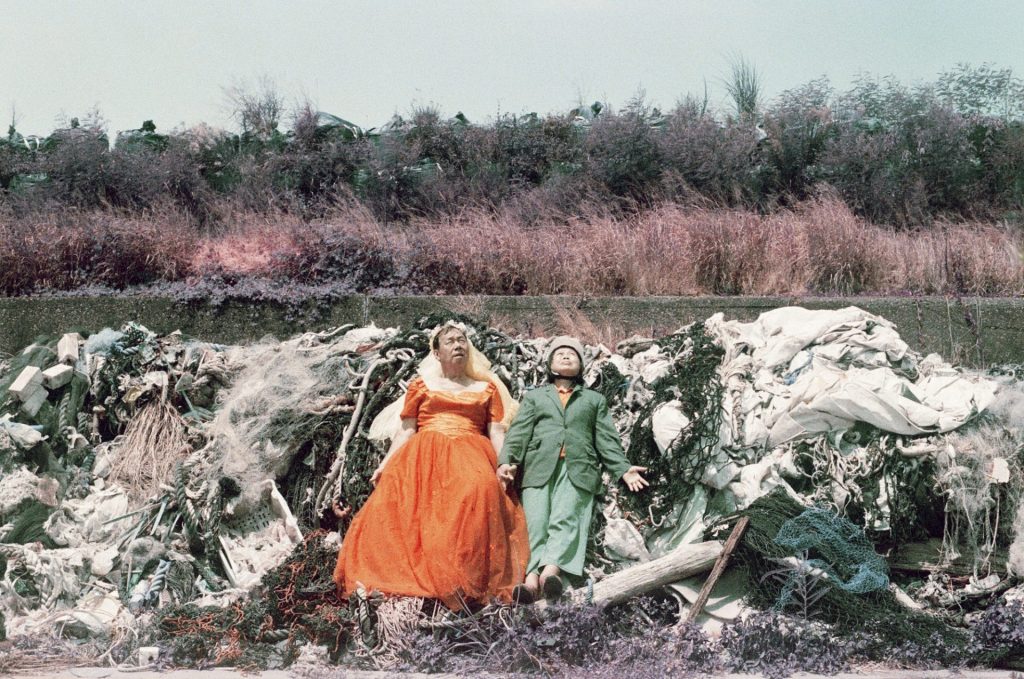
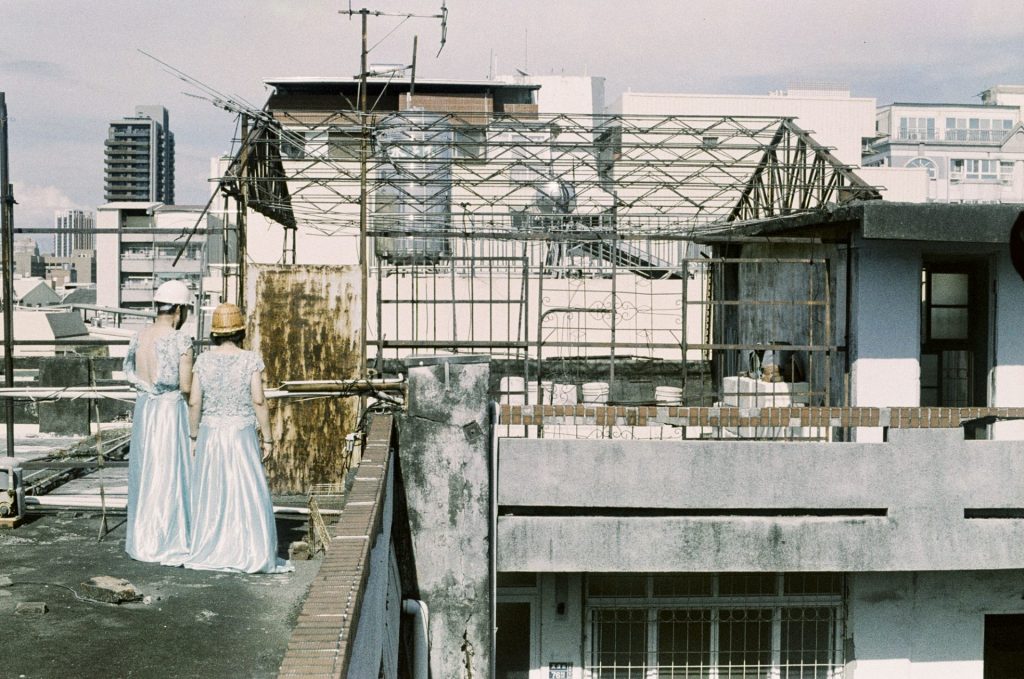
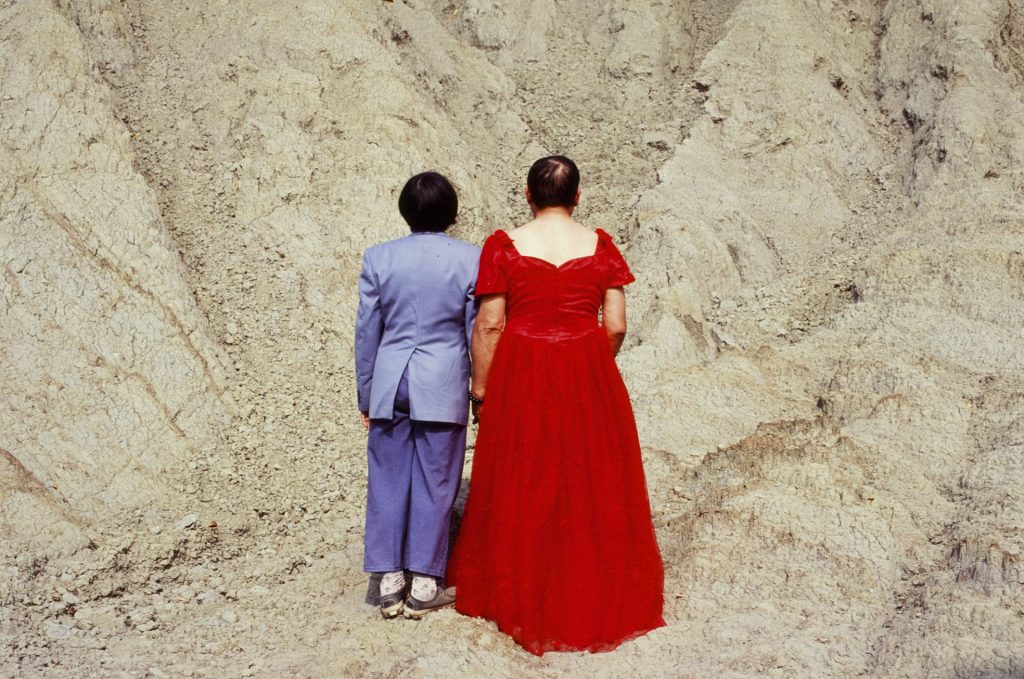
In 2009, while visiting his family in Kaohsiung, Taiwan, Liu Hsing Yu discovered his parents’ 1984 wedding photograph alongside the suit his father had worn for the ceremony. Recreating the image with his parents’ roles reversed—his mother in the suit and his father in a borrowed wedding dress—became the starting point for an ongoing series My Father and Mother. Liu went on to photograph his parents wearing one another’s wedding attire at the former homes of long-deceased relatives across rural Taiwan. These performative acts became a ritual through which he communicated the social transformations of contemporary Taiwan, including the legalisation of same-sex marriage and the growing visibility of LGBT+ communities, to his ancestors. At the same time, the project marked a deeply personal homecoming, allowing Liu to navigate his own coming out through a return to family history and ancestral landscape.

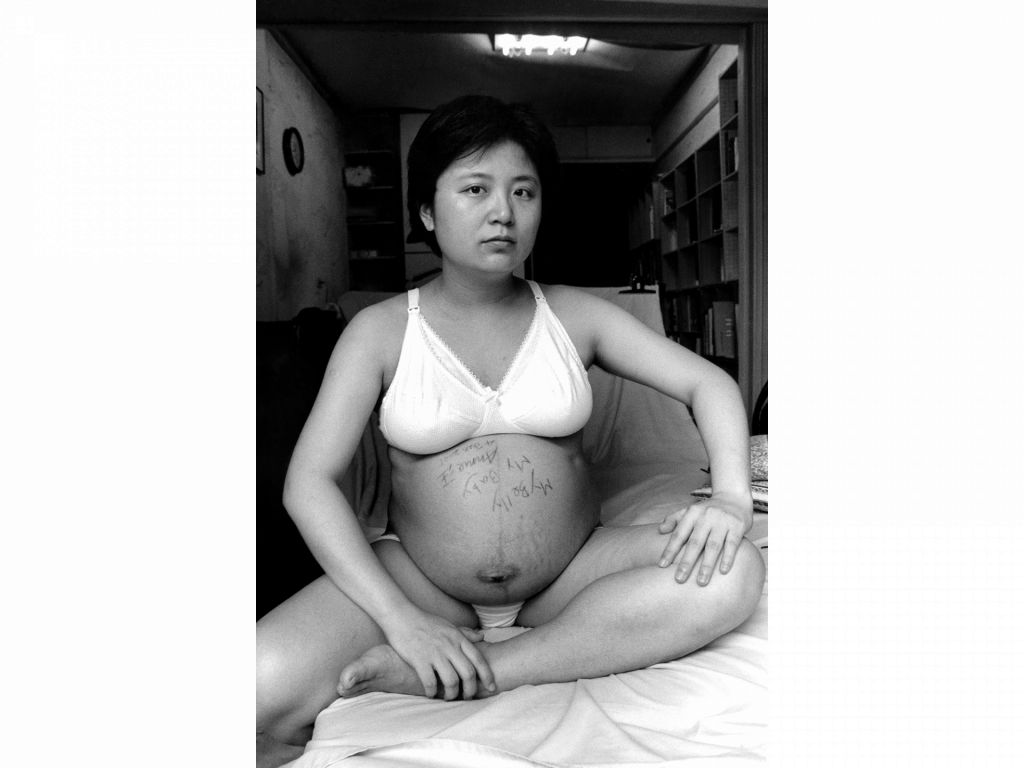
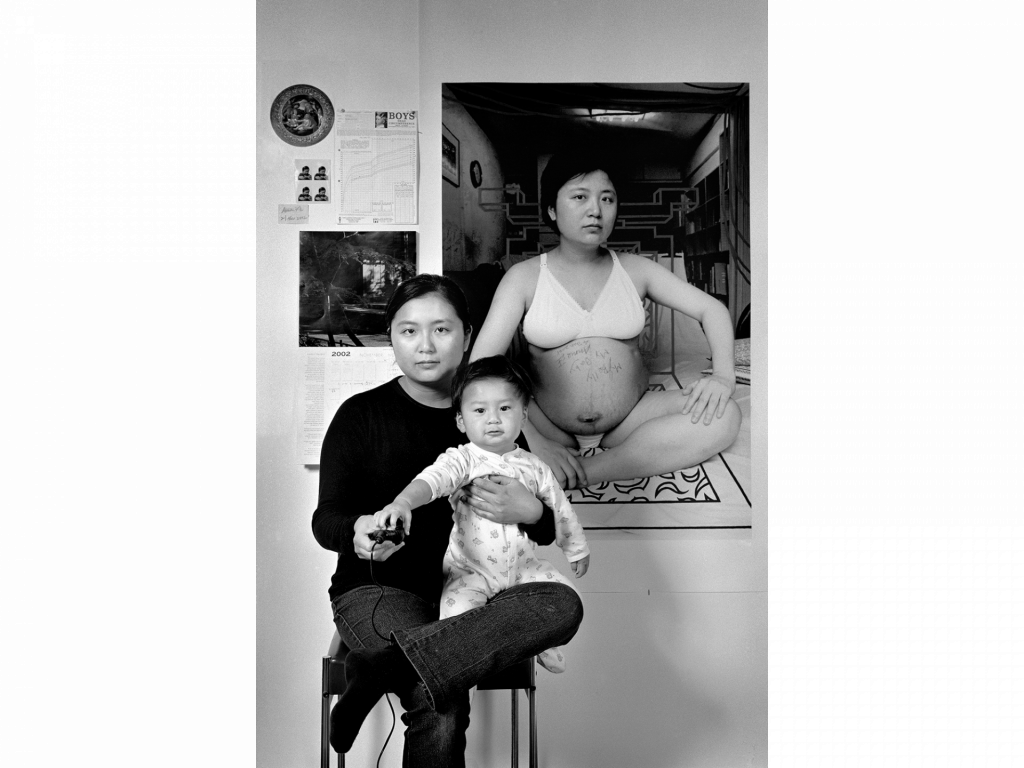
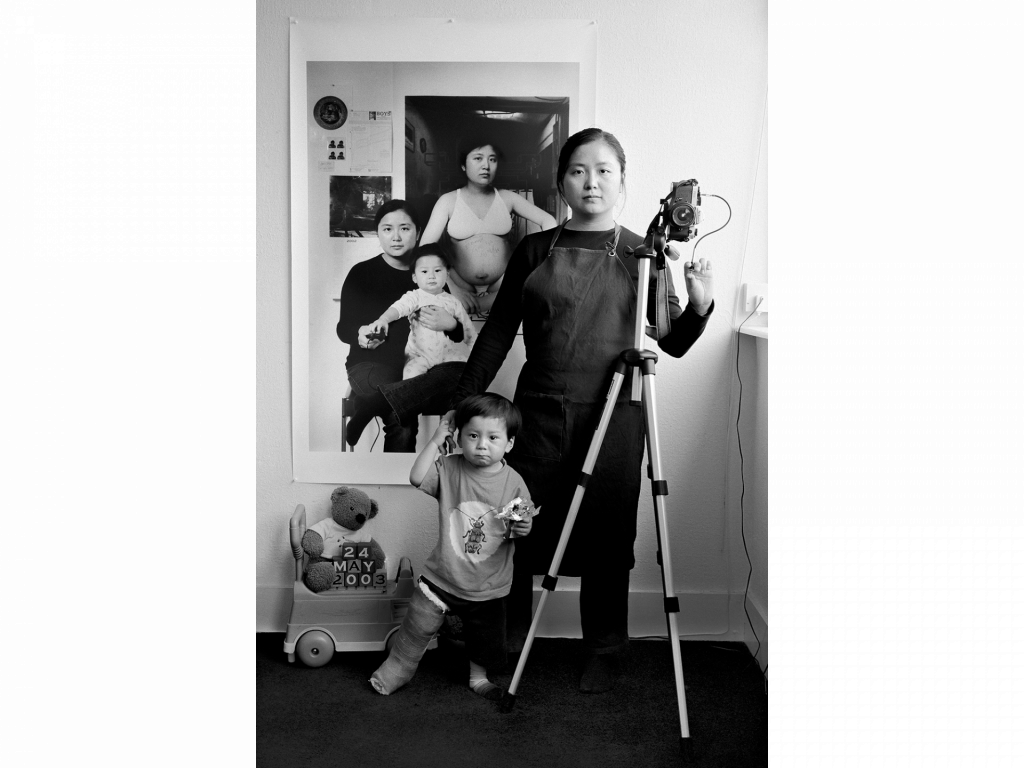
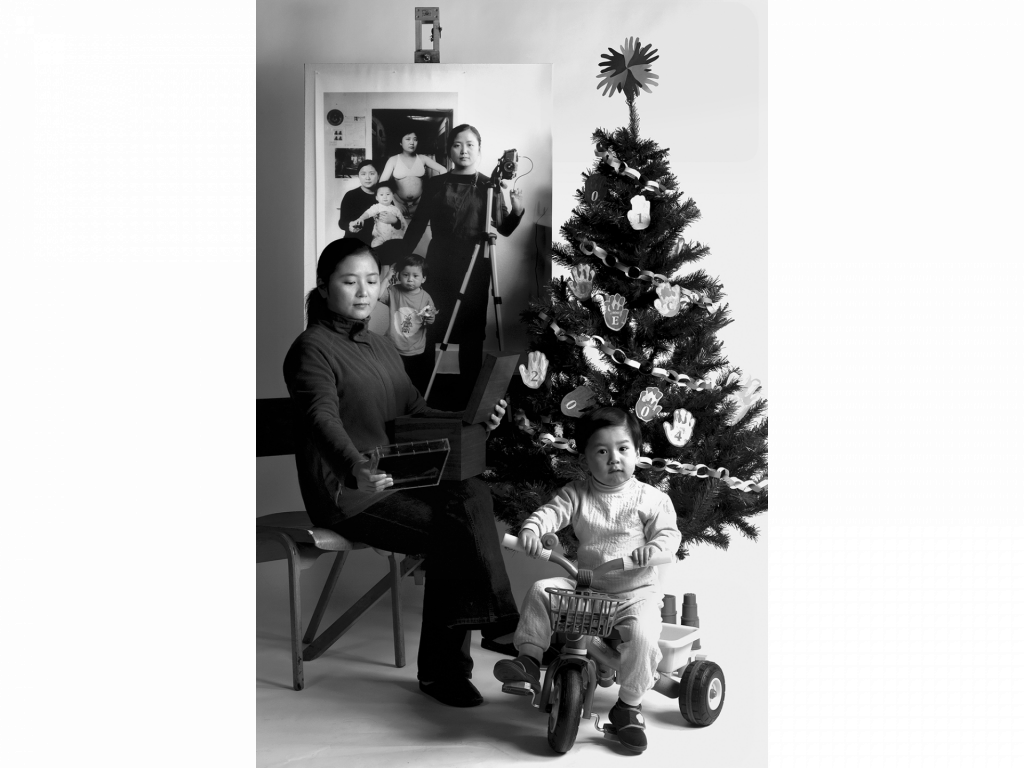
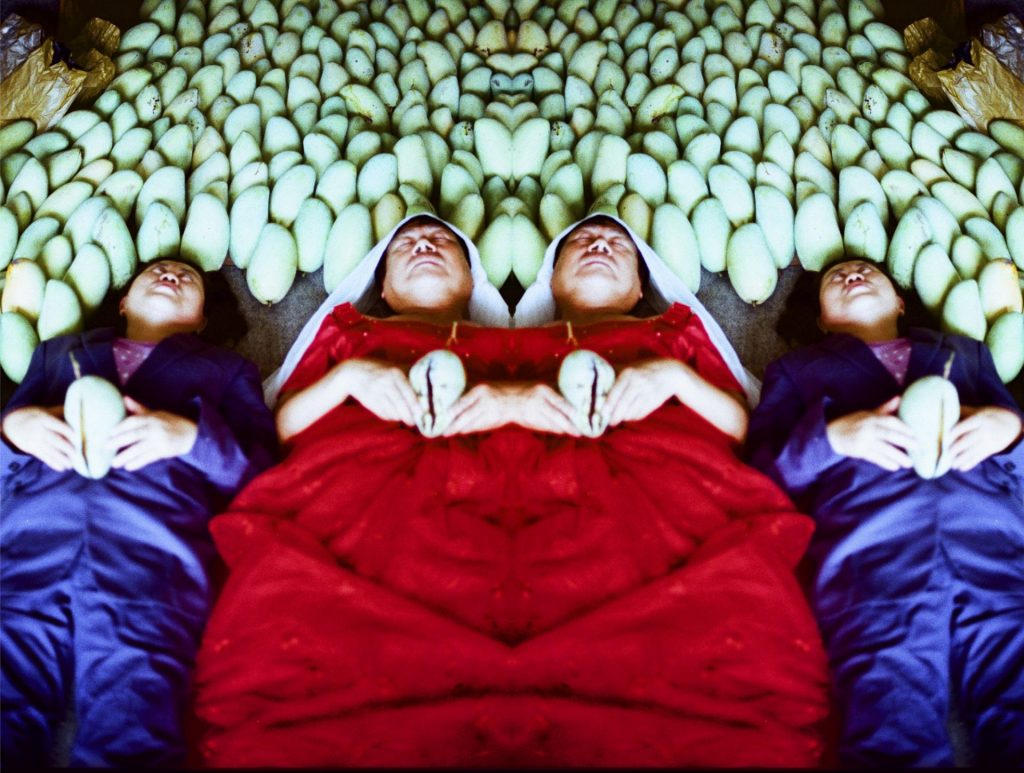
Annie Wang’s The Mother as a Creator (2007–present) offers a sustained meditation on motherhood over seventeen years. Each year, Wang photographs herself and her son before returning the following year to make another portrait in front of the previous image. As successive photographs accumulate, multiple moments in time collapse into a single image, producing what Wang describes as a visual “time tunnel”. Different versions of mother and child coexist, revealing motherhood not as a fixed identity but as an evolving relationship shaped by duration, intimacy and change.

Together, these two practices reveal family as both subject and method. Rather than presenting family as a stable unit, they foreground it as something continually remade through ritual, repetition and care. One work reflects on the changing relationship between parents and their child, the other on the evolving bond between mother and son. They offer complementary perspectives on kinship, identity and belonging, demonstrating how photography can make visible the slow, often imperceptible transformations that shape family life across generations. 

Biographies

Liu Hsing Yu’s work centres on themes of gender, sexuality and human relationships with ecological environments, particularly in relation to Taiwan. For Liu, photography is a participatory medium that enables collaborations with others, working together to challenge conventional perspectives. Major international presentations include Centre Pompidou Paris (2019) and Kyotographie Japan (2025), where he was the recipient of the inaugural KG+Select Award. He was also nominated for the 2018 Taipei Arts Awards. Liu holds an MFA degree from the National Kaohsiung Normal University. 

Annie Wang’s artistic practice focuses on issues of gender and the role of women within society. She has presented her work internationally, at festivals including: Images Vevey, Switzerland (2020), Daegu Photo Biennale, Korea (2021), Photo Australia (2022) and Paris Photo (2023). Her works are held in multiple permanent collections, including: the Museum of Fine Arts Houston (U.S.A), The J. Paul Getty Museum (Los Angeles, U.S.A), the George Eastman Museum (Rochester, U.S.A), Nelson-Atkins Museum of Art (Kansas City, U.S.A), the Harry Rison Center (Austin, U.S.A), The San Francisco Museum of Modern Art (SFMOMA)  (San Francisco, U.S.A) and Tainan Museum of Art (Taiwan). She is also the director of the Cing Tien Art Space and an Assistant Professor at National Hong Dwa University (Taiwan).

In collaboration with:

III Edition Bristol Photo Festival Biennial Announced With the Theme‘Time Machine’

Holly Lynton, Hero, Florence, Massachusetts, 2022 © Holly Lynton

Festival opening week 14 – 18 October 2026. Festival runs until 15 November 2026
bristolphotofestival.org
Press kit with initial images HERE

Drawing on the success of the second edition, which drew over 115,000 visitors, the third edition of Bristol Photo Festival, the international biennial of contemporary photography, will open this autumn with exhibitions and events staged across Bristol’s major visual arts institutions as well as independent and unconventional spaces. Alongside the programme, the Festival will deliver a series of long-term engagement and education projects, working with local communities to explore overlooked aspects of the city’s story.

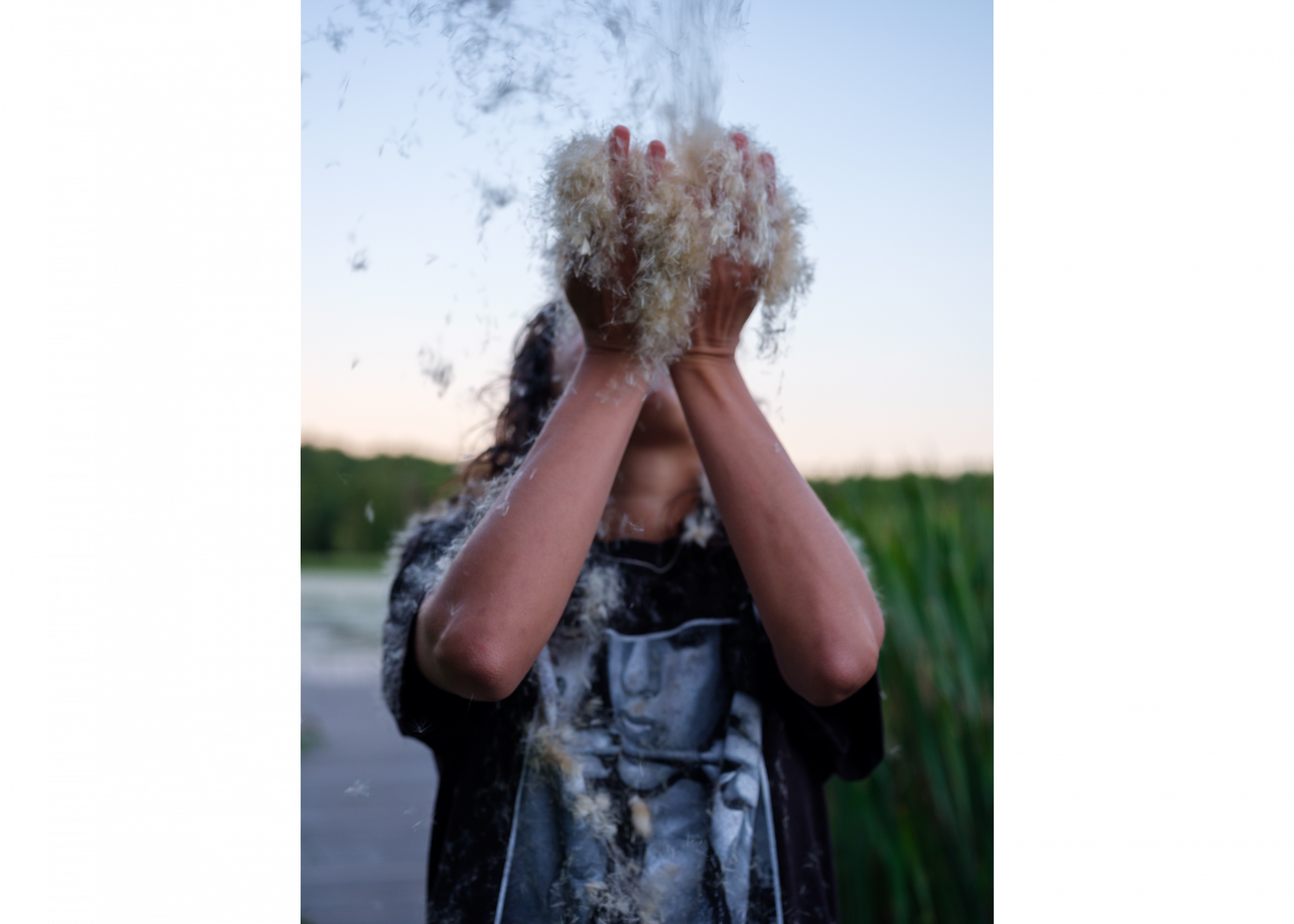
Entitled Time Machine, the third edition explores time as interwoven, where past, present and future fold into one another. Rooted in these understandings of time as cyclical, the Festival considers our present moment as a porous convergence — haunted and nourished by memory, imagination and anticipation. In this context, photography becomes more than documentation; it is an active entanglement with time itself. Images are spaces where memory and possibility coexist, and where time accumulates, loops and returns.

As Alejandro Acín, Festival Director, explains “This edition of the Festival explores how photography unsettles the idea of time as a single line. By bringing together international and local artists, the programme offers a constellation of fresh and thoughtful practices that engage with history, memory and dreams of the future in layered and unexpected ways. We cannot wait to announce the exhibition programme in July. At a moment when the arts and cultural sector is facing significant challenges across the UK, this edition required new ways of thinking, working and collaborating. We are especially excited to partner with outstanding local and international cultural organisations whose shared commitment and support make the Festival possible.”

Bristol Photo Festival is shaped by the movements, ideas and histories of Bristol. The festival includes exhibitions, talks and workshops, bringing together leading international photographic voices in dialogue with the city’s many communities.

The opening week of Bristol Photo Festival will take place from 14 – 18 October 2026, with a wide range of talks and events organised across the city. All exhibitions will be open until 15 November 2026, with presentations in the main partner institutions continuing beyond this date. Please see the website for further details – bristolphotofestival.org

The main cultural partners are: Arnolfini, Bristol Museums, Martin Parr Foundation, Watershed, University of the West of England, Brigstow Institute and University of Bristol alongside independent art and community organisations.

For further information, images and interview requests please contact Sam Trenerry: samtrenerry@yahoo.com/ +44 (0)7780 991 811