
The Floating Harbour: Jem Southam

Opening 18 June – 31 October 2021 | Tue – Fri 10.30 – 15.30 | Weekend 9.00-17.00

Underfall Yard | Cumberland Rd, Bristol BS1 6XG

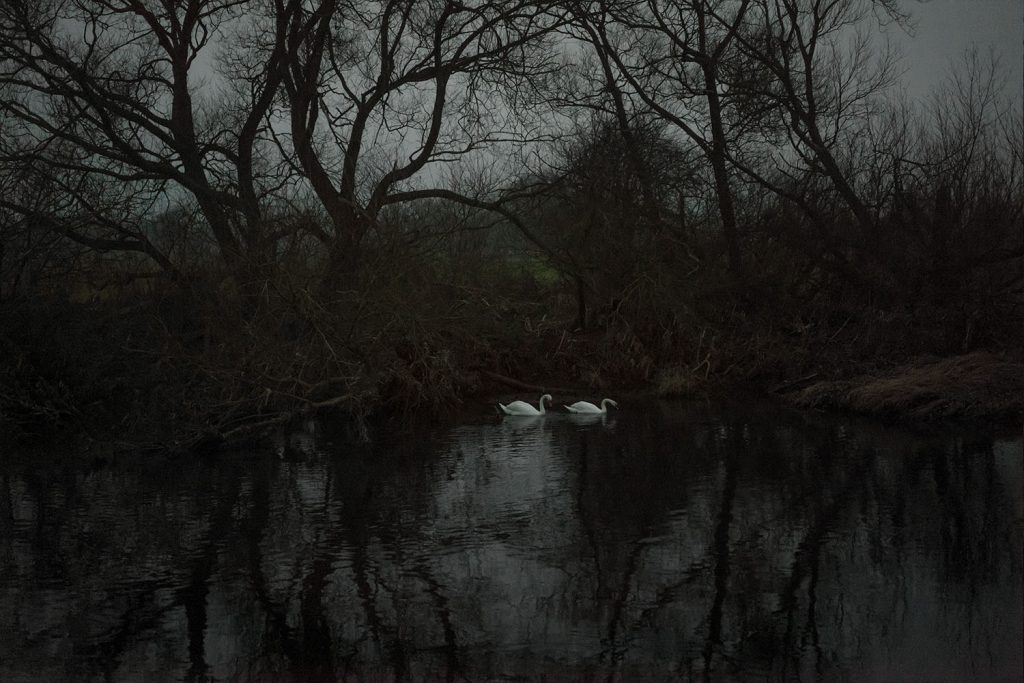
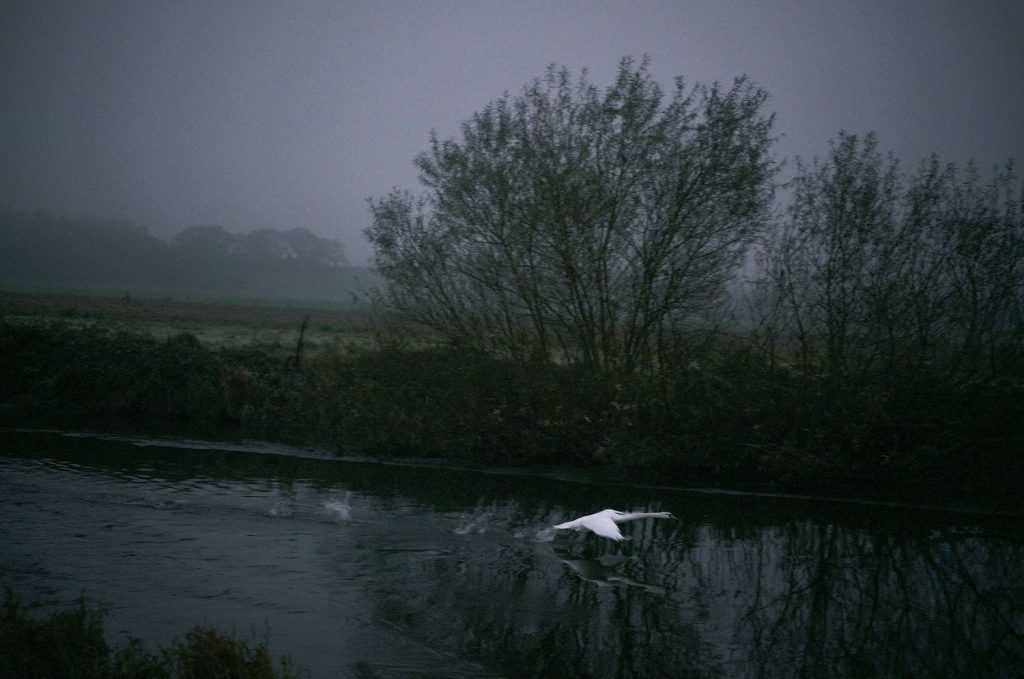
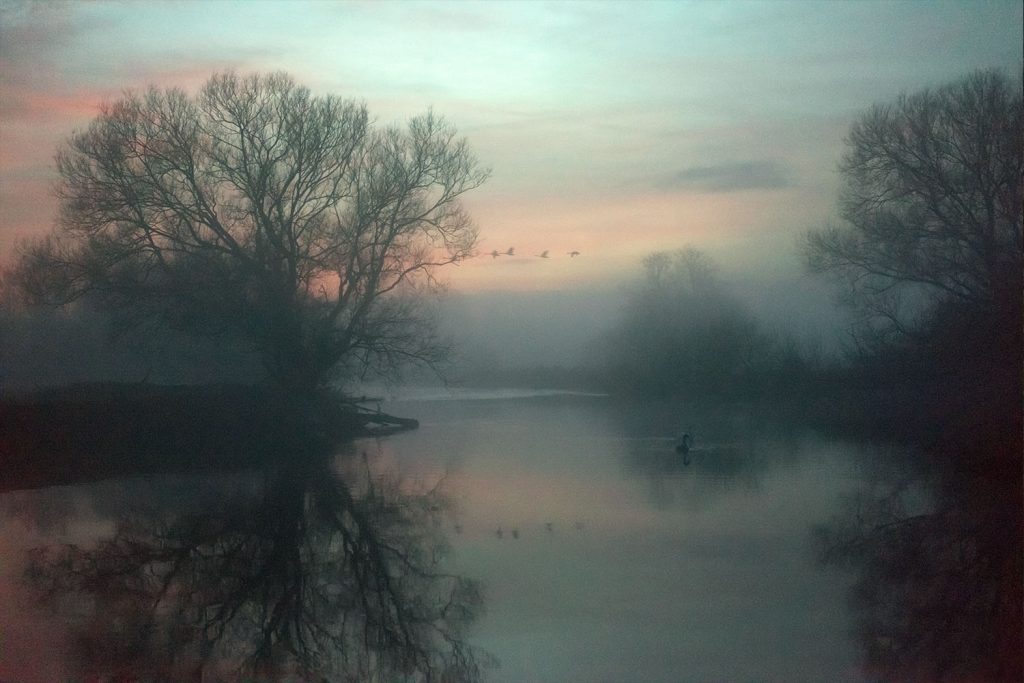
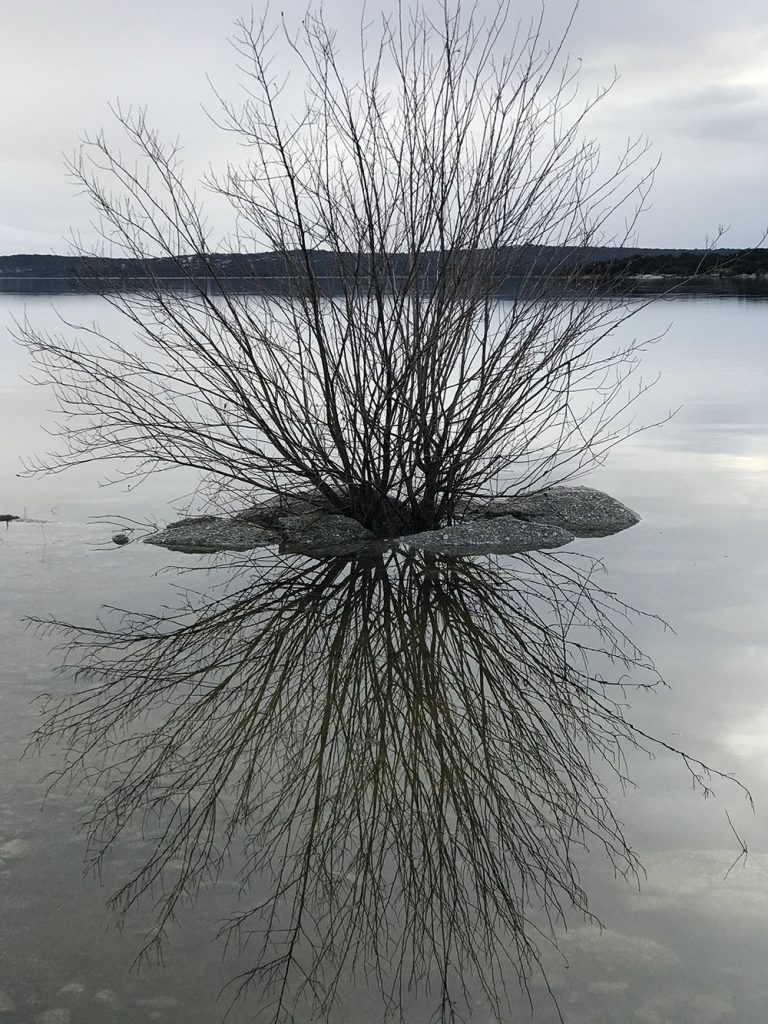
This series of photographs of Bristol Harbour in the late 1970s by Jem Southam provide a unique and definitive portrait of the harbour at a time of rapid change. One of Southam’s first major projects, the photographs were published in ‘The Floating Harbour: A Landscape History of the Bristol City Docks’ (1983) and majority of the works will be exhibited here for the first time.

Unloading the Harry Brown, Hotwells sand wharves, 1978 © Jem Southam

Jem Southam’s grandfather, Harry Cottrell, spent his working life in the Bristol docks as a shipping clerk, overseeing the arrival, unloading and distribution of guano and other such commodities from an office in Queens Square. As a result, when Southam began work at Arnolfini on Narrow Quay in 1977, the city docks held a special meaning for him, despite knowing very little of them or their workings.

‘One day, looking out the window of our office I watched as a large shed was torn down across the other side of the quay. I went over during the lunchbreak with my camera and took some pictures, and as I was doing so realised that the whole of the dockland was going to shortly experience a similar fate. Here was a project waiting for me, and for the next 4/5 years I photographed across the whole of the Floating Harbour.

The Pumphouse, Underfall Yard,1979 © Jem Southam
Blacksmith Shop, Underfall Yard 27th Jan 1982 © Jem Southam

The city had at that time turned its back on the docks. They were run down, only a few surviving industries hung on – the sand wharves regularly brought boats up the river laden with the dredges sand from the Severn Estuary; the timberyards kept going a couple more years; the hydraulic pumphouses still powered some of the bridges and a few of the bonded warehouses remained in use. However the closure of the William Hill shipbuilding yards in 1976 had really put the working life of the docks.

As a result they were almost deserted, and I would spend my Sundays cycling and walking around, rarely meeting a soul. A plan quickly formed to make an archival record of the landscape and remaining architecture of the Floating Harbour in a relatively systematic manner. In my imagination I broke the docks up into a series of different sites, sometimes defined by their use, sometimes just a geographical coherence, and made studies of each one of them.’

Southam photographed sites including Bathhurst Basin, Welsh Back, Cumberland Basin, and Narrow Quay alongside sets of pictures of specific types of dockland furniture – the cranes, the pumphouses, the bridges. Studies were made of individual buildings and their setting, and then further pictures were made of these buildings into the wider landscape. The pictures were all made in black and white using an old-fashioned plate camera and over the course of the project, approximately 1000 negatives were exposed.

Powerboat race, June 1978 © Jem Southam

In the early 1980’s Southam collaborated with John Lord and ‘The Floating Harbour – A landscape History of Bristol City Docks’ was published by John Sansom at Redcliff Press in 1983, and in this same period a couple of small exhibitions of the work were held in the city.

‘’It was always the plan to show some of the pictures in Bristol, well after many people’s memories of the of what they once were had faded, and it is a great pleasure to be participating with the Bristol photography Festival in displaying some pictures outside in the docks themselves.’

Born in Bristol in 1950, Jem Southam’s work is housed in major collections including Rijksmuseum, Amsterdam; Museum Folkwang, Essen; and the Yale Center for British Art, Newhaven. His work has been the subject of numerous international solo exhibitions notably, Tate St Ives (2004), V&A Museum, London (2006) and The Lowry, Salford (2009).

Hotwells Road, 1978 © Jem Southam

Thames Log: Chloe Dewe Mathews

20 May – 29 August 2021 | Thu-Sun 10.00-17.00

Martin Parr Foundation | 316, Paintworks, Arno’s Vale, Bristol BS4 3AR

GETTING TO MPF

Chloe Dewe Mathews spent five years photographing up and down the River Thames, from its puddling source to great estuary mouth. The resulting series of work, Thames Log, examines the ever-changing nature of our relationship to water, from ancient pagan festivities through to the rituals of modern life.

Mass Baptism, Southend, 2013 © Chloe Dewe Mathews

In Thames Log, Dewe Mathews focuses on lives that overlap regularly with the river but often go unnoticed — ship spotters, who log the continual stream of vessels that pass through Tilbury, and mudlarks as they comb the city sludge for Roman and Saxon treasure. In the countryside, above the tidal river, she encounters a druid coracle builder, a mass baptism and the annual census of royal swans.

The works in the exhibition are displayed in geographical order to reflect a journey downstream to the Thames mouth then returning back up to its source. There will be an immersive 6-metre print of the water’s surface with floating crucifix, captured after the ‘Blessing of the River’ ceremony at London Bridge. The Thames becomes a protagonist in a series of diverse practices that seamlessly flow downstream, from May Day Morris Dancing and university boat burning in Oxford, to Islamic evening prayer and Hindu rites in Southend.

Coracle Mission, Lechlade, 2013 © Chloe Dewe Mathews
Maghrib / Evening Prayer, Southend, 2012 © Chloe Dewe Mathews

Thames Log looks beyond the river’s well-documented landscape to consider both religious and secular rituals, and how meaning and identity can be constructed through practices both big and small, private and public. The Thames becomes a source from which to dream, or imagine other places, other rivers – the Volga, the Congo, the Ganges, Venice lagoon, Arcadia. For some, it will represent a final point of departure, as their ashes are scattered into its flow.

Like much of Dewe Mathews’ work, Thames Log pits documentary photography’s tendency to categorise and classify against the mystery and poetry of daily life. Thames Log includes data for each event featured in the photographs including the exact GPS coordinates, dates, tides and weather. By including this information, Dewe Mathews underpins her lyrical images with a rational framework, inviting a reading of the work as a record and witness, whilst reflecting on the process of making work along the river, where a personal photographic ritual evolved.

A book for the series was co-published by Loose Joints / Martin Parr Foundation in January 2021.

Scattering of Human Ashes, Southend Pier, 2015 © Chloe Dewe Mathews

IN PROGRESS: Laia Abril – Hoda Afshar – Widline Cadet – Adama Jalloh – Alba Zari

20 May – 24 October 2021

BOOKING YOUR VISIT

Royal Photographic Society | 337 Paintworks, Arno’s Vale, Bristol BS4 3AR

IN PROGRESS is a new show commissioned by the RPS consisting of five solo exhibitions of both new work and work-in-progress, by five of the most innovative photographers and photo-based artists working today. The exhibition explores a wide range of issues – including personal history, cultural identity, nationality, community, migration, displacement, memory, responsibility, morality, belief and the creative process – and highlights the diverse possibilities that photography offers in the pursuit of both artistic and social progress.

PMS, from the series ‘Menstruation Myths’ © Laia Abril
courtesy Les Filles du Calvaire / courtesy Royal Photographic Society
An officer and lawyer in the Australian Special Forces, 2020
from the series ‘Agonistes’ 2020 © Hoda Afshar
courtesy Royal Photographic Society

The exhibition refrains from explicitly linking the participating artists around an overarching theme or idea, choosing instead to present a group of one-person shows, consisting of both new work and work-in-progress, that both honour and champion each of their independent motivations and artistic practices.

IN PROGRESS explores an extensive range of issues, including personal history, cultural identity, nationality, community, migration, displacement, memory, morality, belief, responsibility and the creative process. Employing a variety of image-making techniques and approaches, the works on display interrogate and emphasise photography’s role in research, critique, discovery, documentation and self-expression, in the pursuit of both artistic and social progress.

Seremoni Disparisyon #1  (Ritual [Dis]Appearance #1), 2019
from the series ‘Seremoni Disparisyon (Ritual [Dis]Appearance)’
© Wildline Cadet courtesy Royal Photographic Society
Love story, 2019 from the series ‘Process’ 
© Adama Jalloh courtesy Royal Photographic Society

IN PROGRESS: Laia Abril – Hoda Afshar – Widline Cadet – Adama Jalloh – Alba Zari also references the first exhibition curated by John Szarkowski at the Museum of Modern Art – Five Unrelated Photographers: Heyman, Krause, Leibling, White, and Winogrand (1963) – which similarly presented a group of one-person shows, ‘each large enough to indicate the cumulative meaning of a body of work…emphasizing [each photographer’s] individual motivation and direction…[and] the independence and individuality of each [artist]’.

Collectively, they celebrate contemporary photography at its most diverse, dynamic and progressive.

My mothers intervention on our Family Album #1 from the series ‘Occult’
© Alba Zari courtesy Royal Photographic Society

From Fairy Tales to Photography: Jo Spence

Photographs from the Hyman Collection

18 May 2021 – 20 June 2021 | Tue-Sat 11.00-18.00 | Sun 11.00-17.00

Arnolfini | 16 Narrow Quay, Bristol BS1 4QA

BOOK YOUR VISIT

Drawn from one of the most comprehensive collections of Jo Spence’s works in the world, From Fairy Tales to Phototherapy focuses on the intersection between arts, health and wellbeing, celebrating her work as a photo therapist in which she used photography as a medium to address personal trauma, reflecting on key moments in her past.

Only when I got to fifty did I realise I was Cinderella 1984, in collaboration with
Rosy Martin. Jo Spence © The Jo Spence Memorial Archive,
Ryerson Image Centre, Toronto, Canada.

Arnolfini presents a major retrospective of the work of photographer Jo Spence (1934 – 1992), drawn from The Hyman Collection, which is one of the most comprehensive collections of Spence’s works in the world. This exhibition originally opened in December 2020 but was seen by a smaller than anticipated audience due to the subsequent covid winter lockdown.

Spence has been an integral figure within photographic discourse from the 1970s onwards. Throughout her diverse projects she is well known for her highly politicised approach to photography and the representation of her own struggles with cancer. The exhibition From Fairy Tales to Phototherapy focuses on the intersection between arts, health and wellbeing, celebrating Spence’s work as a phototherapist in which she used photography as a medium to address personal trauma, reflecting on key moments in her past. This will be the first time that her thesis will be exhibited and published in its entirety. Entitled “Fairy Tales and Photography, Or, Another Look At Cinderella”, this was a pivotal document, created at a crucial point in Spence’s career. The exhibition will focus on the actual smallscale photographs that Spence used in her phototherapy sessions as well as the laminate panels that she used for her workshops and touring exhibitions.

From Fairy Tales to Phototherapy charts Spence’s diagnosis and treatment for cancer, juxtaposing humour with inevitable challenging issues. Themes include Cinderella and Fairytales, Remodelling Photo History/Medical History, Childhood, Child and Parent Relationships, Libido/Sexuality/Marriage, The Grotesque.

Jo Spence: From Fairy Tales to Phototherapy is curated by Keiko Higashi, Engagement Producer at Arnolfini, with Dr. Frances Hatherley, writer, researcher and archivist at the Jo Spence Memorial Library Archive at Birkbeck, University of London.

Island Life: Photographs from the Martin Parr Foundation

18 May – 31 October 2021 | Tue-Sun 10.00-17.00

Bristol Museum & Art Gallery | Queens Rd, Bristol BS8 1RL

BOOK YOUR VISIT

Island Life draws upon photographs from the Martin Parr Foundation collection to show the changing fabric of our cities, society and collective identities. Focusing on post-war from the UK and Ireland, the exhibition will bring together images by over 60 photographers including Khali Ackford, Pogus Caesar, Elaine Constantine, Sian Davey, Chris Killip, David Hurn, Ken Grant, Markéta Luskačová, Graham Smith and Tom Wood. Collectively the images form a compelling study of national behaviour.

I  thought I saw Liz Taylor and Bob Mitchum in the back room of the Commercial, South Bank, 1984.  © Graham Smith courtesy Martin Parr Foundation
Summer Street Party, 2018 © Clementine Schneidermann and Charlotte James courtesy Martin Parr Foundation

The exhibition includes photographs which document moments of historical significance including the poll tax riot, the Aberfan mine disaster and most recently, the BLM movement. These will be displayed alongside images depicting the everyday – weddings, shopping, football and Butlin’s holidays. Island Life traces the evolution of documentary photography in Britain, the photographers who influenced Parr and the younger generation he is influencing in turn.
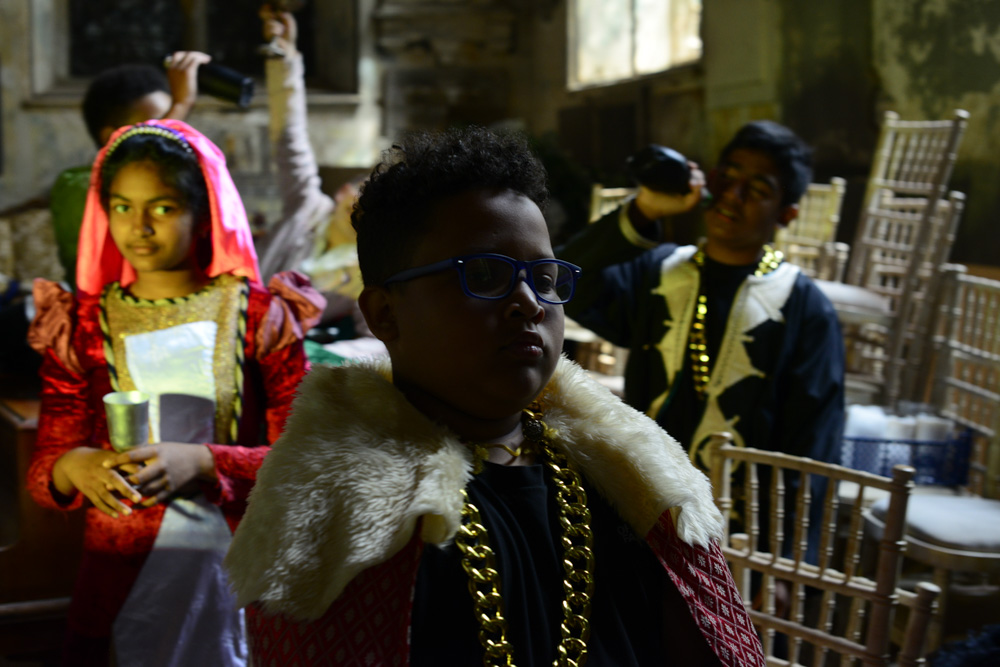
Family Christening, Norris Green, Liverpool, 1989 © Ken Grant
courtesy Martin Parr Foundation
Ferryquay Gate, Derry, silver gelatin print, toners and watercolours,1989 © Victor Sloan courtesy Martin Parr Foundation

Lips Touched with Blood: Sarah Waiswa

Opening 18 May – 31 October 2021 | Tue-Sun 10.00-17.00

Bristol Museum & Art Gallery | Queens Rd, Bristol BS8 1RL

BOOK YOUR VISIT

Sarah Waiswa, a documentary and portrait photographer based in Kenya, will be collaborating with the British Empire and Commonwealth Collection at Bristol Archives. The exhibition will showcase a selection of her contemporary portraits of African people alongside portraits from the archives in a thought-provoking display, to reframe and challenge existing narratives around colonialism, power and identity. Sarah draws heavily on the captions of the archive images in her interpretation, and one of these has been used as the title of the exhibition.

Anette (25 Futures Series), 2017 © Sarah Waiswa

Sarah Waiswa has collaborated with the British Empire and Commonwealth Collection (BECC) at Bristol Archives to create the exhibition Lips Touched with Blood. Waiswa’s contemporary portraits of African people will be displayed alongside manipulated portraits from the archive to reframe and challenge existing narratives around colonialism, power and identity. 

“This project deals with the impact of colonialism on identity in Kenya. The archival images show the power imbalance that existed between the colonialists and the natives. In the archival images, the photographers had the power to define the narrative. They presented the people in the way they saw them, and not necessarily as who they were. The Kenyans pictured are seen but not really seen. To me the people are subjects in someone else’s story and not their own. They are illustrations. The captions on the photos are a further expression of this perception. The colonialist’s research is more important than the person in the photo.

An educated Kikuyu (Elspeth Huxley, 1937) © British Empire and Commonwealth Collection

By blacking-out the subjects, I interrupt that colonial gaze and take the power away from the photographer. I hope the viewer will ask themselves “who are these people?” That is the question I wish the photographer would have asked. By juxtaposing my images of young Kenyans, I hope that the images can speak to each other. I hope that it can show a reclamation of identity. There was erasure in colonial time. This project is an attempt to reconstruct and recreate the subjects’ own identity on their own terms.’

The exhibition’s title, Lips Touched with Blood is drawn from the caption of a portrait from the archives taken in 1953. The photograph was taken after an alleged Mau Mau cleansing ceremony shortly after the Lari massacre and there is much ambiguity in both the photograph and the caption. It is not clear if the man depicted was connected to the Mau Mau and their atrocities, or if he were an innocent local resident, smeared by sensationalist British propaganda about the Mau Mau. Waiswa was drawn to this photograph as the look on the man’s face is one of power, which is absent from many images taken in the colonial period.

Randy (25 Futures Series), 2017 © Sarah Waiswa

The archive photographs in Lips Touched with Blood are from the British Empire & Commonwealth Collection. The archive contains around half a million photographs from the countries of the former British empire, alongside film, oral history, objects and documents. The photographs date from 1860 to the 1970s, and were mostly taken by British travellers.

Sarah Waiswa is a documentary and portrait photographer based in Nairobi, Kenya. She was invited to collaborate with the archives on this exhibition as she has a particular interest in exploring identity on the African continent. Sarah had access to thousands of digitised archive images via the new BECC online catalogue, from which she made her final selection. The BECC team are working on various other projects with audiences in postcolonial countries and diaspora communities worldwide to restore as much context to their collection as possible.

A Kikuyu girl (Elspeth Huxley, 1953) © British Empire and Commonwealth Collection

Beyond the Frame: Heather Agyepong | Jessa Fairbrother | Lua Ribeira

Opening 18 May – 10 October 2021 | Tue-Sun 10.00-17.00

Bristol Museum & Art Gallery | Queens Rd, Bristol BS8 1RL

BOOK YOUR VISIT

Artists Heather Agyepong, Jessa Fairbrother, and Lua Ribeira have collaborated with Bristol Museum and Art Gallery. In a series of separate interventions, the  artists’ own work will be displayed alongside and interspersed with the Museum’s collections to encourage new dialogues around the works.

Too Many Blackamoors, 2015 © Heather Agyepong
Commissioned by Autograph ABP
(Courtesy of the artist/The Hyman Collection)

Memorialization in the Age of Forgetting | Heather Agyepong

Heather Agyepong utilises her own image in her photography, performing a catalogue of identities that have paraded through colonial discourse on African peoples. ‘Too many blackamoors’ quotes a letter from Queen Elizabeth I and Agyepong performs cartes de visites (visiting cards) by Sarah Forbes Bonetta, the West African god daughter of Queen Victoria. Her work will be shown among the Grand Tour paintings from the 18th century offering a postcolonial perspective on the gallery. 

‘Study I’ from The Rehearsal (dedicated to Augustine), 2011
© Jessa Fairbrother

In Conversation, and In Character | Jessa Fairbrother

Jessa Fairbrother explores images of femininity through the lens of psychoanalysis, the relationship between mother and daughter, motherhood and loss. She often (but not always) uses her own body, along with personal photographs which she embellishes with stitch, or punctures. Her work will be shown among the museum’s renowned Pre-Raphaelite paintings and modern French art, presenting self-authored contemporary narratives alongside the historic images of women by men. 

Click on the images to see the virtual tours.

With communion dress, Galicia, Spain, 2018 © Lua Ribeira / Magnum Photos

Craving Gaps | Lua Ribeira

Lua Ribeira brings a vivid intensity to her photographs which aim to question the role images play in the social construction of groups. She collaborates with her subjects and there is a spiritual dimension to the images that has affinities with Renaissance art on the one hand and formal aspects of abstract painting on the other. Ribeira is interested in the idea of being transported – by synthetic, aesthetic or religious means – and alludes to angels and demons in her work. Her photographs, belonging to various series, will be shown amongst the angels and demons of Solario and Bellini.

Click on the images to see the virtual tours.

James Barnor: Ghanaian Modernist

Opening 18 May – 31 October 2021 | Tue-Sun 10.00-17.00

Bristol Museum & Art Gallery | Queens Rd, Bristol BS8 1RL

BOOK YOUR VISIT

James Barnor was Ghana’s first international press photographer working from his studio Ever Young at the time of independence (1957) and selling his pictures to the Daily Graphic and Drum magazines. He came to Britain in 1959, photographing London and returning to Accra where he established X23, the city’s first colour photography studio. Ghanaian Photographer showcases Barnor’s Black modernism, a fusion of pan- African futurism and 1970s style.

Print in progress, Studio X23. Accra, c. 1972 © James Barnor
Courtesy of Galerie Clémentine de la Féronnière

A new retrospective exhibition by photographer James Barnor draws on previously unpublished work to demonstrate his modernism and inherent skill as a colourist. 

James Barnor (b.1929) was Ghana’s first international press photographer. He came from a family of photographers and established his own studio in Accra, Ever Young in 1950. He worked from this studio at the time of Ghana’s independence whilst also selling his pictures to the Daily Graphic and Drum magazines. He came to Britain in 1959, and whilst working in a factory, he took photography evening classes at the London College of Printmaking and lessons with the Colour Processing Laboratory in Kent. He went on to study at Medway College of Arts, eventually returning to Accra in 1969, where he established X23, the city’s first colour photography studio. He returned to London in the 1990s.

In 2009 the 80 year-old photographer revealed his archive to two London curators. His archive is a remarkable document of post-war modernity spanning photographs from the time of Ghana’s independence, scenes of multicultural London, and later images recording a strong postcolonial identity in Ghana. The metaphor of the road in the book’s title, suggests the continuity between the past and the present, tradition and progress, and the links between generations and peoples of different contents present in Barnor’s work.

Accra, 1971. A shop assistant at the Sick-Hagemeyer store © James Barnor  
Courtesy of Galerie Clémentine de la Féronnière

The earliest photographs in the book and exhibition include lively street scenes taken in Accra after Barnor had been encouraged by Jim Bailey, editor of Drum, to record Ghanaian Independence. These are contrasted with his composed studio portraits taken at Ever Young, showing his photographic range from the start of his career. An image of Barnor himself captured working in the Agfa-Gevaert in Mortsel, Belgium, 1969 and an image of a print in progress, made at Studio X23, Accra, c. 1972, offers insights to his working practice. Once in London, both Barnor’s commissioned magazine work and his informal photographs of friendships recorded the diversification of Britain. Later works include an alternative image to his well-known vivid portrait of an assistant at Sick-Hagemeyer department store posing with coloured canisters, and a photograph of a model posing for the Agip F1 calendar in a wax-print dress, signalling her postcolonial identity.

Click on the image below to visit the virtual tour.

Diversity and Inclusion in Photography: A Symposium

Vanley Burke Siffa Sound System, playing the Carnival, Handsworth Park. 1983

Fri, 21 May 2021 09:30am to 5pm | ONLINE | £5 TICKET | BOOK NOW

Diversity and Inclusion in Photography is presented by Bristol Photo Festival in partnership with the RPS and Jennie Ricketts.

The Bristol Photo Festival and the RPS are hosting a one-day online symposium, curated by Jennie Ricketts. Through the work of photographers and those working within photography it explores themes around diversity and inclusion.

In order for Diversity to have real meaning, people of different classes, ethnicity, ability, sexuality should be given equal opportunity for inclusive collaboration. Photography is arguably the most democratic universal language with a broad global reach, so it seems the perfect medium for bringing people together to achieve this. A festival that celebrates both the practice of photography in its many forms, and offers a commitment to change the disparity between one practice or another can only be a positive means of attaining that goal.

This Symposium for the first edition of Bristol Photo Festival sets out to demonstrate such a commitment. It aims to provide some insight on the work and practice of different photographers, highlight the challenges they may have faced and how they overcame them, and finally identify what is needed and how to support them in their practice now and for the future.

Running Order for the Day:

  • From 9.15: Zoom waiting room opens
  • 9:30 – 10:00: Introduction from Tracy Marshall- Grant, Bristol Photo Festival Director handing over to Jennie Ricketts.
  • 10:00 – 11:00: Keynote speaker Vanley Burke

Break

  • 11:15 – 12:15: Joy Gregory in conversation with Jennie Ricketts
  • 12.20 – 1:00: Dexter McLean. Pre-recorded presentation.

Lunchbreak

  • 2:05 – 3:20 : Dr Shawn Sobers will have conversations with Black photographers Garfield McKenzie from Bristol and Dennis Wiley from Bath
  • 3:25 – 4:05: David Constantine

Break

  • 4:15 – 5:15: Women in photography panel discussion with Joanne Coates, Kirsty MacKay, Fiona Rogers, Max Houghton

Close

The other confirmed speakers include:

The keynote speaker is the renowned Birmingham photographer Vanley Burke. Often described as the ‘Godfather of Black British Photography’, his presentation will be about his 50 year career in the photography industry with particular focus on his 2012 retrospective book and exhibition ‘By the Rivers of Birmingham’.  He will live stream and take questions from the audience.  http://www.vanley.co.uk/

Joy Gregory.  Practicing since the 1980s, Joy will present an abridged summary of her career as a fine art practitioner and academic in the photography industry.  https://www.joygregory.co.uk/.

Dexter McLean.  A photographer with Cerebral Palsy, Dexter will talk about managing his work and practice while living with the condition.  https://www.dextermclean.com/contact.php.

David Constantine.  Co-founder www.motivation.org.uk.  A quadriplegic wheelchair user, David will talk about managing his practice alongside heading a disabled charity and being a motivational speaker. https://www.sittingimages.com/,

Joanne Coates. Founder, Lens Think Yorkshire. Describes herself as a working class documentary storyteller, and will talk about her practice in the rural North of England.  http://www.joannecoates.co.uk/

Kirsty MacKay. Co-founder, The Other Collective.  A Scottish documentary photographer living in Bristol will talk about her practice and work with The Other Collective.  https://www.the-other-collective.com/

Dr Shawn SobersAssociate Professor of Cultural Interdisciplinary Practice at the University of the West of England, Bristol.  Will chair a panel discussion with Black photographers Garfield McKenzie from Bristol and Dennis Wiley from Bath. www.shawnsobers.com

Max Houghton is the Course Leader for MA Photojournalism and Documentary Photography (full-time) at London College of Communication. Max is a writer, editor and curator working with the photographic image as it intersects with politics, law and human rights. Her interdisciplinary doctoral research at UCL focuses on law and the image, and, with David Birkin, she is co-founder of UAL research hub Visible Justice.”

Fiona Rogers is the Director of Photography and Operations for Webber Represents and Webber Gallery. She is the founder of Firecracker, a platform supporting female photographers, and recently authored a book published by Thames & Hudson; Firecrackers: Female Photographers Now, celebrating contemporary women practitioners. She is on the Board of the Martin Parr Foundation and The Peter Marlow Foundation and an advisor to the Royal Photographic Society.

01/03/2021 BPF Press Release

Programme for inaugural Bristol Photo Festival announced

A Sense of Place’ | Exhibitions open late May through to winter 2021

bristolphotofestival.org


Bristol Photo Festival is a new biennial festival with a year-round programme of commissions, collaborations, and exhibitions by both local and international artists. The first edition encompasses a summer showcase of photography exhibitions across the city followed by a full autumn programme of festival exhibitions and events including a book fair, film programme, talks series and symposiums. 

For the first time the city’s major visual arts institutions, alongside independent and unconventional spaces, have come together to create a programme to demonstrate the power and diversity of photography. The festival will launch in the spring with exhibitions including work by Laia Abril, James Barnor, Chloe Dewe Mathews, Jessa Fairbrother, Adama Jalloh, Lua Ribeira, Jem Southam, and Sarah Waiswa amongst others. This will be followed by major exhibitions in the autumn by Stephen Gill, Lebohang Kganye and Thilde Jensen alongside series of outdoor shows. The exhibitions are accompanied by an events series, workshops and collaborations both on and off-line to bring the festival outside the conventional gallery space. 

Exhibitions | Opening spring 2021

© Elaine Constantine

Island Life: photographs from the Martin Parr Foundation | Bristol Museum and Art Gallery

Island Life draws upon photographs from the Martin Parr Foundation collection to show the changing fabric of our cities, society and collective identities. Focusing on post-war from the UK and Ireland, the exhibition will bring together images by over 60 photographers including Khali Ackford, Pogus Caesar, Elaine Constantine, Sian Davey, Chris Killip, David Hurn, Ken Grant, Markéta Luskačová, Graham Smith and Tom Wood. Collectively the images form a compelling study of national behaviour.

From Thames Log by Chloe Dewe Matthews

Thames Log | Chloe Dewe Mathews | Martin Parr Foundation

Chloe Dewe Mathews spent five years photographing up and down the River Thames, from its puddling source to great estuary mouth. The resulting series of work, Thames Log, examines the ever-changing nature of our relationship to water, from ancient pagan festivities through to the rituals of modern life.

From The Floating Harbour by Jem Southam

The Floating Harbour | Jem Southam

This series of photographs of Bristol Harbour in the late 1970s by Jem Southam provide a unique and definitive portrait of the harbour at a time of rapid change. One of Southam’s first major projects, the photographs were published in ‘Floating Harbour’ (1983) and majority of the works will be exhibited here for the first time. 

© James Barnor. Courtesy of Galerie Clémentine de la Féronnière

James Barnor: Ghanaian photographer | Bristol Museum and Art Gallery

James Barnor was Ghana’s first international press photographer working from his studio Ever Young at the time of independence (1957) and selling his pictures to the Daily Graphic and Drum magazines. He came to Britain in 1959, photographing London and returning to Accra where he established X23, the city’s first colour photography studio. Ghanaian Photographer showcases Barnor’s Black modernism, a fusion of pan-African futurism and 1970s style.

© Jessa Fairbrother

Museum Interventions | Bristol Museum and Art Gallery           

Artists Heather Agyepong, Jessa Fairbrother, and Lua Ribeira have been invited to take part in collaborate with Bristol Museum and Art Gallery. The artists’  own work will be displayed alongside and juxtaposed with the Museum’s collections and archives.  

© Widline Cadet

IN PROGRESS: Laia Abril – Hoda Afshar – Widline Cadet – Adama Jalloh – Alba Zari | Royal Photographic Society

IN PROGRESS is a new show commissioned by the RPS consisting of five solo exhibitions of both new work and work-in-progress, by some of the most innovative photographers and photo-based artists working today. The exhibition explores a wide range of issues – including personal history, cultural identity, nationality, community, migration, displacement, memory, responsibility, morality, belief and the creative process – and highlights the diverse possibilities that photography offers in the pursuit of both artistic and social progress.

© Sara Waiswa (left). © Sarah Waiswa, created from original photo by Charles Trotter, copyright Bristol Archives. (right)

Lips Touched with Blood | Sarah Waiswa | Bristol Museum and Art Gallery

Sarah Waiswa, a documentary and portrait photographer based in Kenya, will be collaborating with the British Empire and Commonwealth Collection at Bristol Archives. The exhibition will showcase a selection of her contemporary portraits of African people alongside portraits from the archives in a thought-provoking display, to reframe and challenge existing narratives around colonialism, power and identity. Sarah draws heavily on the captions of the archive images in her interpretation, and one of these has been used as the title of the exhibition. There will also be a programme of talks, workshops and events around this exhibition.

Claybottom bridge © Chris Hoare 2020

Growing Spaces | Chris Hoare | Royal Fort Gardens (University of Bristol)

Growing Spaces by photographer Chris Hoare is a chronicle of urban land cultivation in Bristol. Since April 2020, Hoare has been slowly and methodically documenting the allotment-goers, landscape and seasonal changes across the official and unofficial growing spaces of the city. The resulting photographs will be exhibited in the inaugural edition of the festival to coincide with the publication of a book of the project by RRB Photobooks.  

© Debshuddha. From his project Belonging.

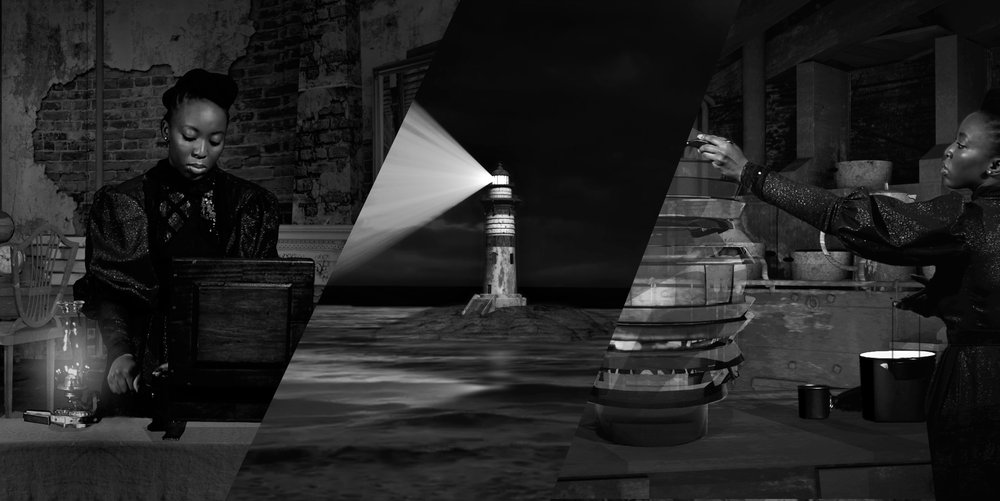
Elective Affinities | BPF Public Gallery | Billy Barraclough, Debsuddha, Jenna Garrett, Kelly O’Brien, Maria Gracia Cebrecos, Sibusiso Bheka 

The concept of ‘elective affinity’ presented in 1809 by Johann Wolfgang Goethe in his novel Wahlverwandschaften (Elective Affinities), is used to express the conflict between responsibility (culture) and passion (nature) – and the ‘natural’ matchmaking force between them. This concept is the inspiration for the group exhibition, online installation and publication produced during Catalyst —an international mentorship programme showcasing six innovative photographers. The works explore family narratives, social roles, grief and loss, faith and place, mythological representations and racial segregation.  This exhibition is produced by IC Visual Lab in collaboration with Bristol Photo Festival.

Exhibitions | Opening autumn 2021 

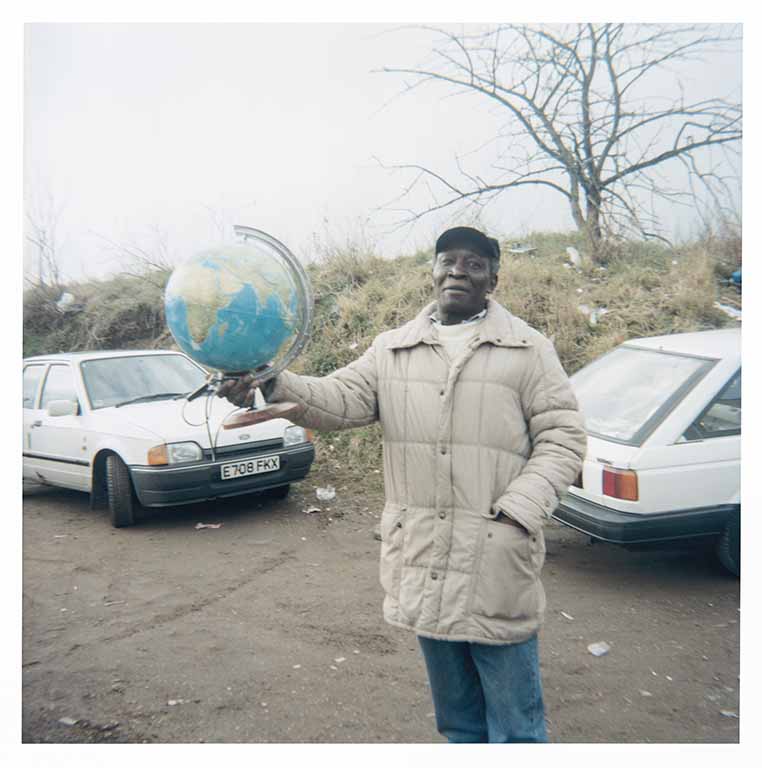
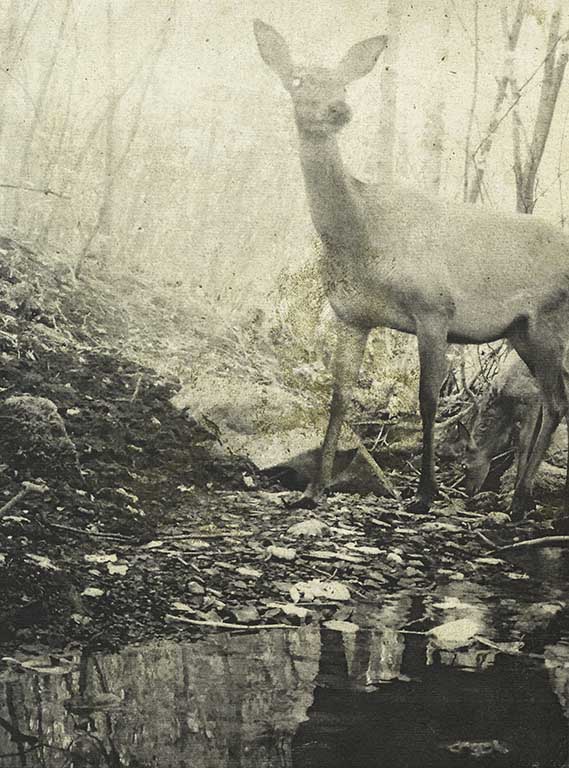
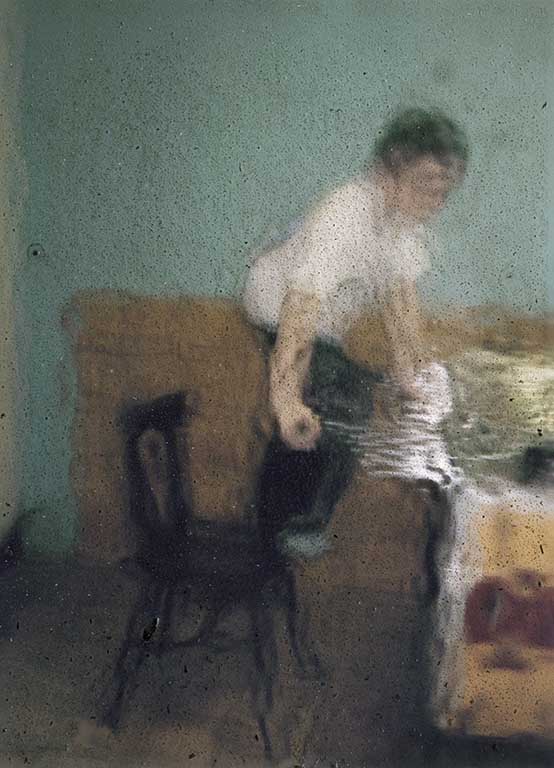
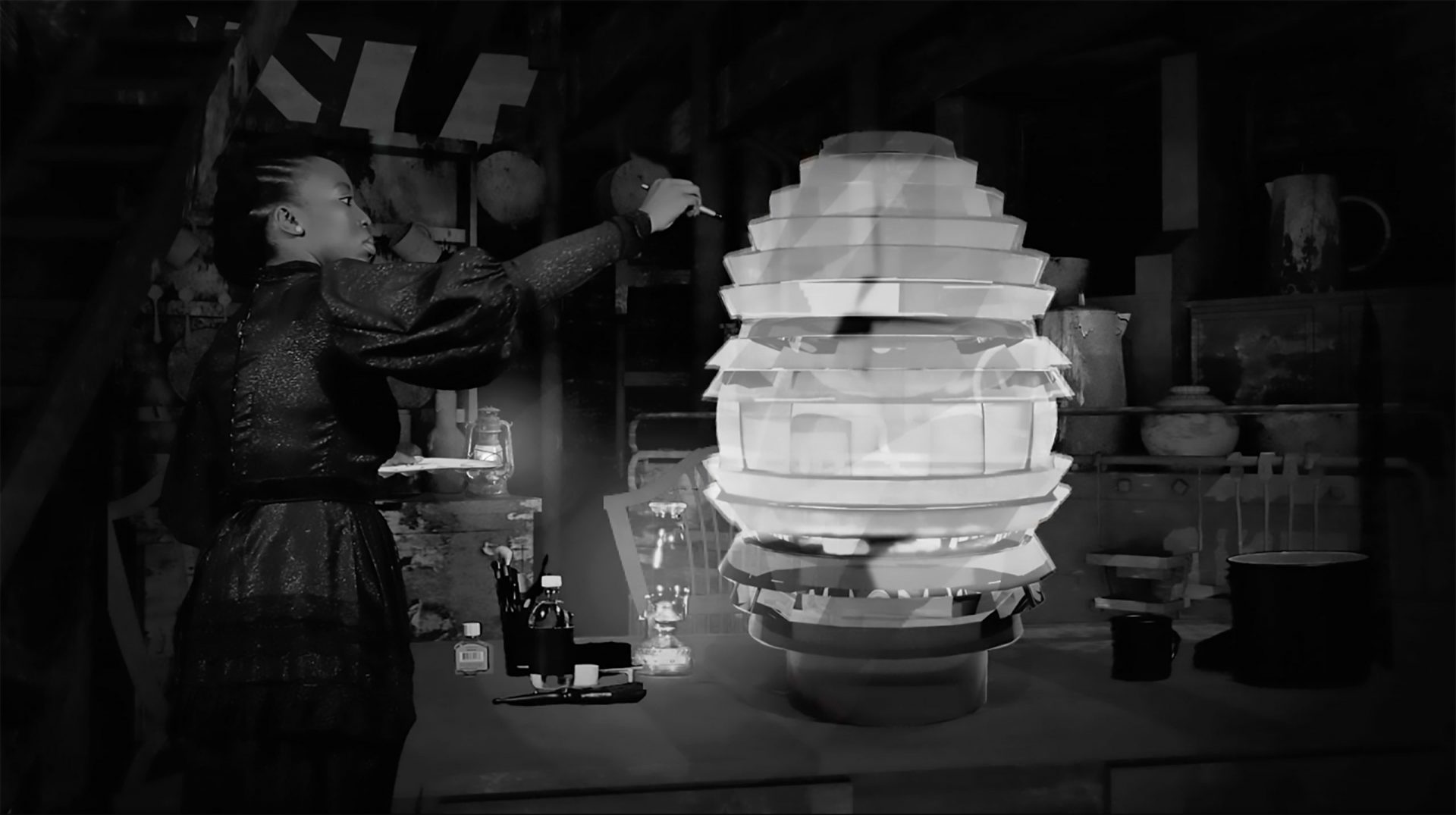
Film still from Dipina tsa Kganya © Lebohang Kganye

Dipina tsa Kganya | Lebohang Kganye | Georgian House Museum 


A film installation exploring a familial narrative that is concerned with notions of healing, enacted through gestures of naming and of cleansing. South African artist, Lebohang Kganye references family, memory and heritage. Kganye has created a new work at the Georgian House Museum as part of Bristol Photo Festival. The installation offers a response to the violence of historical erasure of names and oral traditions. The house was once home to a sugar trader and his enslaved staff. Dipina tsa Kganya invites us to reflect on the legacy of colonialism as a shared history.

From The Pillar 2015 – 2019 © Stephen Gill

Stephen Gill | Arnolfini | 6 October 2021 to 16 January 2022

Celebrating thirty years of extraordinary practice, Bristol-born photographer Stephen Gill, draws together new previously un-exhibited series, such as Please Notify the Sun, alongside works from his iconic back catalogue, with the first UK presentation of images from award winning photographic series and book The Pillar. The exhibition explores through the flea markets and towpaths of Hackney Wick in London, to his current rural surroundings amidst the Swedish countryside.

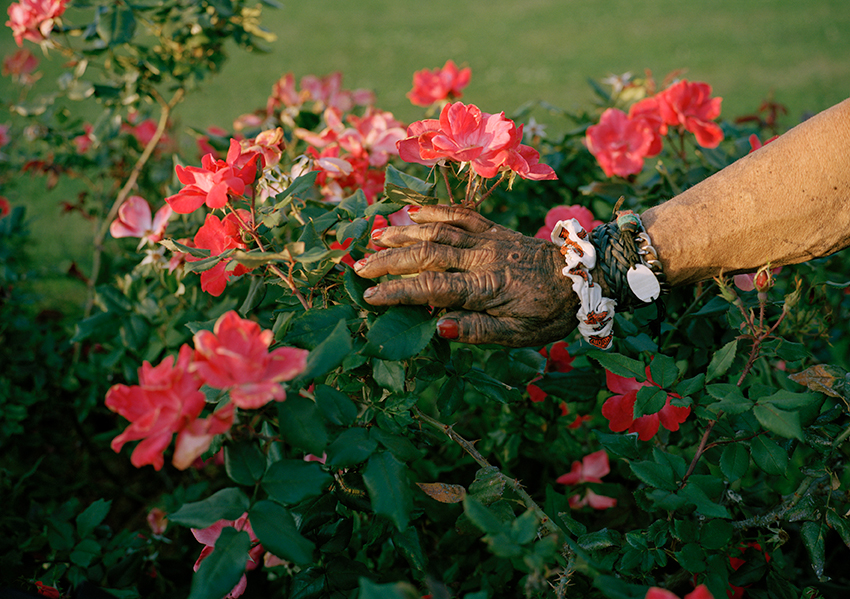
Mike’s black hand in roses. New Orleans, Louisiana 2018 © Thilde Jensen

I AM NOT INVisible | Thilde Jensen | Martin Parr Foundation

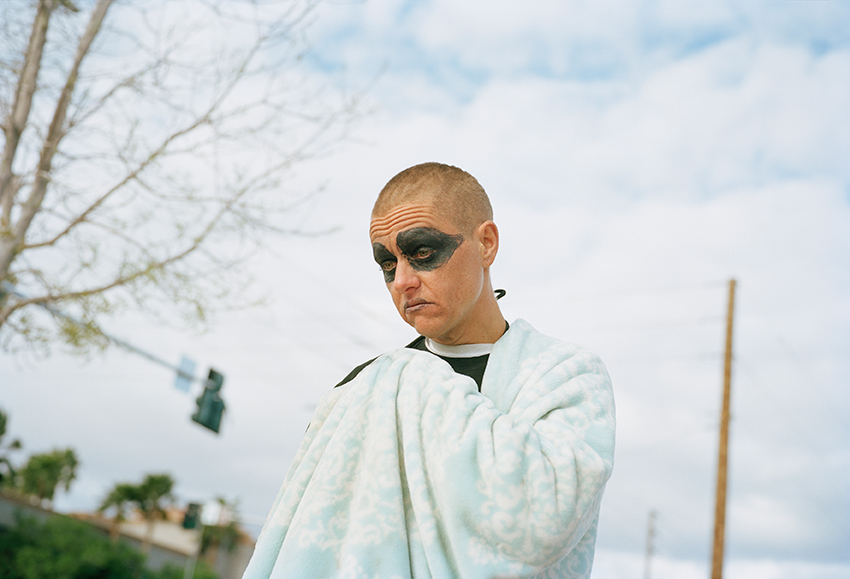
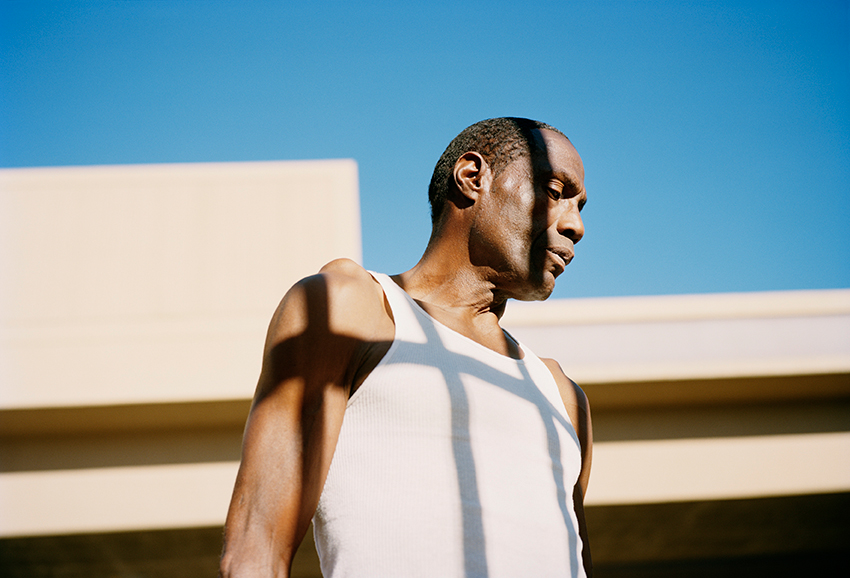
I AM NOT INVisible is a visual account of homelessness in America. Over a period of 4 years, Danish photographer, Thilde Jensen, set out across the US to create an authentic document of this community excluded from mainstream society. 

© Peyton Fuldford

WITH-IN | Firecracker 10-year anniversary programme

Bristol Photo Festival is collaborating with Firecracker to celebrate their 10th year anniversary. The exhibition will bring together photographers whose practice moves, with intimacy, through overlooked groups of people. A generation of female and female-identifying photographers is using photography not as a tool of oppression but as instigator of conversations, interventions and collaborations. This exhibition, which includes work by Peyton Fulford, Spanita Malik, and Raphaela Rosella amongst others will be accompanied by a talks and events programme.

© Helen Sear

Turn to Return. | Helen Sear & Robert Darch  | Centerspace
 
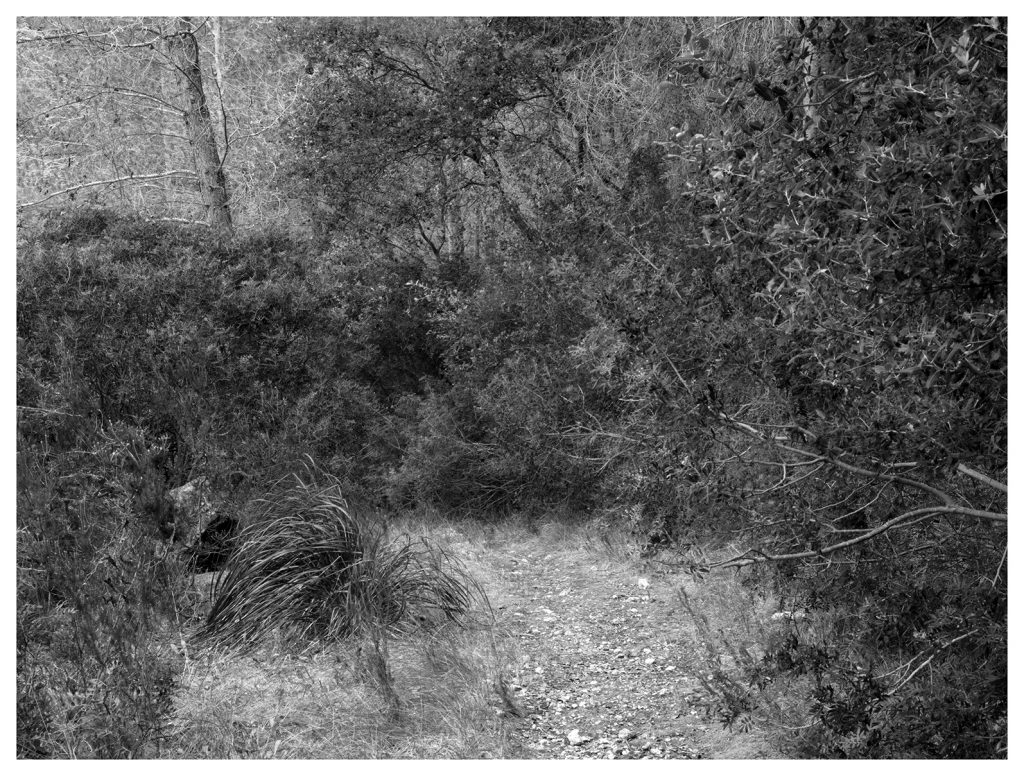
Work by Helen Sear and Robert Darch will be exhibited together for the first time in Turn to Return. The Island by Darch is a poetic series of photographs made in response to Britain’s vote to leave the European Union. The series reflects his anxieties, hopes and fears about a decision that will affect generations for years to come. Helen Sear’s Love Island is a series of photographs made repeatedly walking the same mountain passage in Majorca during the month of December 2019.  Exploring imitation and contagion as forms of magic involving repetition and contact, these photographs depicting Aleppo pines and fallen boulders reveal a path while simultaneously denying a view.

Siffa Sound System playing the Carnival Handsworth Park. ©Vanley Burke 1983

Symposium – 21 May 2021

The Symposium ‘Inclusive Collaboration: Commitment to Change’, aims to demonstrate the diversity of practitioners within the photographic community. The keynote speaker is Vanley Burke, and other confirmed speakers include Joy Gregrory,  Dexter McLean, David Constantine, Joanne Coates, Kirsty MacKay, and Dr Shawn Sobers. Produced by Jennie Ricketts. There will be a second symposium in autumn 2021.

From Photography to Cinematography | June / October (TBC) Watershed 

A series of screenings and events which will explore the creative relationship between the still and the moving image. Many cinematographers work with or incorporate still image influences into their filmmaking. This programme will feature the film work of cinematographers like Ed Lachman (The Virgin Suicides, Carol) Hélène Louvart (Rocks, Happy as Lazzaro) and Seamus McGarvey (The Hours, We Need To Talk About Kevin) to examine their photographic influences and inspirations.

‘When we established Bristol Photo Festival in mid 2019 and began to put together this programme with our festival funders, venue partners and curators we could never have imagined that we would be launching it during such period in global history. Our theme ‘A Sense of Place ‘ has taken on an even greater resonance and relevance after 12 months of life restricted within a global pandemic. Working and evolving with the circumstances and the unknown, the team, the artists and partners continued to progress this programme, daunted at times but never broken.  So it is with even greater pride that myself, Alejandro Acín and the rest of the festival team and partners announce the inaugural programme of this first edition of Bristol Photo Festival’ 

Tracy Marshall-Grant  – Festival Director

For further press information and images please contact Eleanor Macnair  press@bristolphotofestival.org

Notes for editors 

The theme   – A Sense of Place

To photograph a place is to describe a location that has been shaped, nurtured and even contested. It can define the frontier between nature and culture and hint at the complexities of ownership and access. It can be attended by competing narratives and polarised histories, whether they lean left or right. It can shape our understanding of the world and the qualities that come to define us…and it can be about belonging, about appreciation and knowing a place so well that it is like no other. 

Bristol Photo Festival has been made possible thanks to public funding from the National Lottery through Arts Council England.